Friday, April 1, 2022

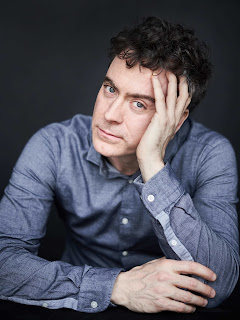
Harpsichordist Mahan Esfahani was in Israel to perform at the Felicja Blumental Music Festival - "Magic Carpet" with Myrna Herzog (viola da gamba) and pieces from Bach's Well-Tempered Clavier at a concert with Zvi Meniker and Robert Markham


Magic Carpet

Myrna Herzog, Mahan Esfahani (Yoel Levy)


The Felicja Blumental International Music Festival was founded in 1999 by Annette Céline to honour the memory of her mother, acclaimed 20th Century pianist, Felicja Blumental. In Tel Aviv’s longest-running classical music Festival, Céline served as artistic director until her death in 2017. Today, under the directorship of Avigail Arnheim and Idit Magal (Felicja Blumental Music Center), the festival, taking place annually at the Tel Aviv Museum of Art, continues to honour the memory of both Felicja Blumental and Annette Céline. At a cocktail party prior to two concerts featuring harpsichordist Mahan Esfahani on March 24th 2022, we had the pleasure of meeting guests of honour - Brazilian Ambassador to Israel, his wife and members of his office - as well as Arnheim and Magal. 


"Magic Carpet'' took place in the gallery of the Mizne-Blumental Collection, a room that has housed a permanent comprehensive exhibition of early 20th-century European art since 1993, and in which a portrait of Felicja Blumental hangs. Performing together for the first time, harpsichordist Mahan Esfahani (Iran/UK/Czech Republic) and Myrna Herzog (Brazil/Israel) - viola da gamba. - played a program of works from the 17th- to 21st centuries. Opening the event was guest-of-honour, Gerson Menandro Garcia de Freitas, Brazilian Ambassador to Israel. The Ambassador spoke of Herzog and Esfahani as upholding the high artistic standards set by Felicja Blumental, a pianist and composer who had made Brazil her new home.


The program began with François Couperin's 9th Concert - 'Ritratto dell'Amore" (Portrait of Love) - from the composer's Concerts Royaux.  Herzog and Esfahani gave expression to the work's elegance and good humour - the energetic (even rakish) playfulness of the livelier dances, graced with the gamba's rippling inégal passages, with the refined discourse of the more tranquil movements rich in harpsichord spreads. Delivering the work suggesting the charms of an imaginary beloved, the artists' suave performance of this chamber music, written for the enjoyment of Louis XIV, was most pleasing, as it intimated French taste on a more private, human scale. 


The evening's Brazilian content was represented by "Five Brazilian Miniatures" by Edmundo Villani-Côrtes, the performance of which was dedicated to the memory of Annette Céline. Considered one of the most important Brazilian composers of the 20th century, Villani-Côrtes (b.1930) imbued his works with the blend of popular- and classical music that has become his trademark. Esfahani and Herzog gave a sensitive, finespun reading of the piece, rich in infectious, toe-tapping rhythms and humorous touches. Presenting the audience with the "Brazilianness" of late 20th century compositional aesthetic, Herzog's convincing playing of the work's strongly melancholy and tender modal melodies was complemented by Esfahani's enriching and evocative rendering of Villani-Côrtes' keyboard score. 


Mahan Esfahani's connection to the Czech Republic stems from the fact that he studied in Prague with the celebrated Czech harpsichordist Zuzana Růžičková. Today, he makes his home in Prague. At the Tel Aviv concert, his performance of Bohuslav Martinů's "Two Pieces for Harpsichord" (1935), a pair of miniatures of contrasted mood straddling tonality and its boundaries, was fresh and intriguing, a small work indicative of how Martinů combined different elements to form his own eclectic, indeed, uniquely cohesive musical language. 


Haim Alexander's "Improvisations on a Persian Wedding Song" (1974) reflects the aim of several European-born Israeli composers to engage in writing of an Eastern or oriental style (Alexander immigrated to Palestine {Israel} in 1936 from Germany) to create a locally-influenced style of composition here in Israel. Esfahani's playing of Alexander's harpsichord piece was zesty, intense and flexed, its insistent melodic, dance-like motifs carefully evading western harmonic associations, as the melody found its way in and out of a constantly spiralling, repetitive, uninterrupted accompaniment, then winding down to a single unison. 


After studying and performing in Russia, Germany and Holland, Moscow-born pianist/composer Uri Brener (b.1974) made his home in Israel. Brener dedicated "Magic Carpet" for viola da gamba and harpsichord to Myrna Herzog and Mahan Esfahani. This performance was the world premiere of  the work (the concert taking its title from this piece). Herzog and Esfahani gave refined, dedicated, in-depth expression to the rich, exotic hues of Brener's oriental musical canvas, to both its mystery and intensity, a journey taking the listener through the piece's wide range of textures and timbres, evoking from eerie, otherworldly sensations to busy, "crowd scenes" and wild, unrelenting dances. Brener's writing for the two instruments is sophisticated, informed and impactful. A truly multifaceted musician, the composer has previously transcended boundaries to probe various different musical worlds, here delving into the world of orientalism via his own sensibility, his refined and subtle musical language.


J.S.Bach's Sonata No. 2 in D major BWV 1028 for harpsichord and viola da gamba was intended for the 7-string viol, an instrument of which Bach was especially fond, and may very well have been composed with virtuoso gambist Carl Friedrich Abel in mind. Infusing the imitative dialogue of the opening Adagio with tranquillity and inquiry, the artists then chose not to take the brisk, tightly-constructed Allegro at breakneck speed, as they invited us to follow the abundance of interest they were displaying. Then, the solemn (indeed, meditational), lilting Andante, played by them with personal feeling and fragility before launching into the final Allegro (here, Bach entrusts the harpsichord and the viol witha short cadential episodes) its weave of delightful rhythmic figures rich in energy and articulacy.


The gallery of the Mizne-Blumental Collection made for an atmospheric setting for this memorable concert, indeed, a major event of the 2021-2022 concert season.


                                         —-------------------------------------------


Bach - Preludes and Fugues, 300-year Celebration


The same evening, the Felicja Blumental Music Festival hosted a unique Bach concert in the Tel Aviv Museum's Recanati Auditorium. Information put together by Aviad Stier on J.S.Bach's "Well-Tempered Clavier" was presented to the audience by Avigail Arnheim.


Three artists each performed four (different) pairs of preludes and fugues from the WTC (Books I, II) on different keyboard instruments. In correct historical order, the program began with Mahan Esfahani playing them on a two-manual harpsichord. This was followed by Zvi Meniker (Israel-Germany) on fortepiano and Robert Markham (UK) on the modern piano. With no aim to pronounce which of the three keyboard instruments was superior (or the most authentic) for the repertoire, this was a fascinating event, with each of the three outstanding artists offering profound readings of the pieces in playing that was personal, intelligent, sensitive, articulate and aesthetically pleasing. How was such an extraordinary event going to end? Literally, by taking the listener's breath away: in the same historical order, each artist then performed Prelude No. 1 from the WTC I, signing out with his own powerful, unspoken gesture of respect and humility.  

Zvi Meniker (Yoel Levy)


Mahan Esfahani (Yoel Levy)


Robert Markham (Yoel Levy)

Wednesday, March 23, 2022

The Jerusalem Opera celebrates its tenth anniversary at the Jerusalem Theatre with a gala concert of opera gems

Rotem Braten (flute), soprano Tali Ketzef (Elad Zagman)


There was magic in the air in the Henry Crown auditorium of the Jerusalem Theatre on March 15th 2022 as people arrived to attend the gala evening celebrating the Jerusalem Opera's 10th anniversary.  Presenting opera choruses and arias were local and Israeli-trained opera singers with the Jerusalem Symphony Orchestra, conducted by Omer Arieli, the Jerusalem Opera's musical director. Master of ceremonies was Yair Haidu, who has done the honours since the opera's first gala evening in 2012; his father, Prof. Andre Hajdu, was one of the visionaries and initiators of the Jerusalem Opera. Welcoming the audience and thanking all the people and organizations for making the Jerusalem Opera a reality was Jerusalem deputy mayor Yosi Havilio. 


Opening the evening's musical program and marking the 180th anniversary of the premiere of Giuseppe Verdi's "Nabucco", Omer Arieli led the JSO in a fresh, contrasted and exhilarating performance of the overture, one consisting of themes from the opera, including that of the Chorus of Hebrew Slaves, as well as the depiction of the Israelites' curse on Ismaele for his betrayal. Then, two arias from Verdi's "Il trovatore" - Leonora's Aria sung with delicacy, expressiveness and fine vocal control by soprano Mima Millo, followed by the Gypsy Aria, into which mezzo soprano Noa Hope infused strong, saucy gypsy presence, as she and Arieli brought its vibrant dance rhythms to the stage. In the Slander Aria from Rossini's "Barber of Seville", bass-baritone Vladimir Braun, one of Israel's major, long-established opera singers, addressed each word and syllable, articulately explaining the source and nature of slander with the wink of an eye, as the orchestra endorsed his every word. Then to baritone Oded Reich's exuberant performance of the Toreador Song from Bizet's "Carmen", an aria celebratory in character, in which the arrogant toreador Escamillo describes various situations in the bullring, the cheering of the crowds and the fame that comes with victory. The stringent vocal and theatrical challenges of the Mad Scene from Donizetti's "Lucia di Lammermoor" were met admirably by soprano Tali Ketzef, wielding the coloratura as a vehicle of dramatic expression. Kudos to Rotem Braten for her sensitive, attentive rendering of the Mad Scene's flute obbligato, literally accompanying Lucia's descent through agony and delusion to death. On a happier note was Song to the Moon from "Russalka" (Dvořák), arguably one of the most beautiful arias ever written for the soprano voice, with Olga Senderskaya’s honeyed, mellow vocal colours and appealing stage presence rendering the aria a study in subtle shadings and deep feeling.


Then to the evening's opera choruses - from Rimsky-Korsakov's "The Tsar's Bride", the Marfa’s Aria was sung delicately and with delightful shaping by soprano Yekaterina Chepeleva, this followed by a quartet (Braun, Chepeleva, Hope, Stas Davidov); Millo, Ketzef and Hope addressed the complex melodic weave and individuality of roles in a trio from "Der Rosenkavalier" (Richard Strauss); and, with much good cheer, all the singers joined to perform the Champagne Chorus from "Die Fledermaus" (Johann Strauss II). Returning to "Nabucco", the festive, sparkling event signed out with a more thoughtful item - the Chorus of the Hebrew Slaves, the performance of it dedicated to the Ukrainian refugees. Once again, as in the Jerusalem Opera's productions over the past ten years, Maestro Omer Arieli's in-depth, dedicated guidance and direction of singers and orchestra transported the audience into the joyful, gripping, turbulent and alluring world of opera.


Oded Reich,Vladimir Braun,Olga Senderskaya (Elad Zagman)


Saturday, March 19, 2022

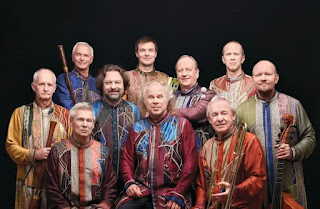
The Jerusalem Baroque Orchestra is back with another Bach Festival. Hortus Musicus (Estonia) and director Andres Mustonen joined the JBO for "Schütz and his Contemporaries"

Hortus Musicus (Pnina Even Tal)


With the anniversary of J.S.Bach's birth on March 21st, the Bach Festival  is once again under way. Under the auspices of the Jerusalem Baroque Orchestra and directed by JBO founder and artistic director David Shemer, Bach Festival VI opened with a three-day Baroque workshop for young musicians, topped off by a concert performed by participants.


For "Schütz and his Contemporaries", held in the conference hall of the Jerusalem International YMCA on March 14th 2022, the JBO was joined by Hortus Musicus (Estonia) and its violinist/director Andres Mustonen, who conducted the concert. Hortus Musicus and Mustonen are no new faces to Israeli concert platforms, neither was this concert their first collaboration with the Jerusalem Baroque Orchestra. Prof. Shemer opened the evening's proceedings by making chronological order for the festival: early Baroque repertoire will be performed before concerts of Bach's music.


In his 'Historical Description of the Noble Art of Singing and Playing' (1690), Wolfgang Caspar-Printz described the “three famous S’s” - court music director of Dresden Heinrich Schütz; Johann Hermann Schein, the choirmaster of Leipzig’s St. Thomas Church and Samuel Scheidt, the music director from Halle – as “the three best composers in Germany at this time”. They were close friends, working and living in the same part of Germany. Indeed, Heinrich Schütz (1585-1672) has frequently been referred to as the greatest German composer before Johann Sebastian Bach. Following his early set of madrigals, almost all of the Saxon-born’s known works are vocal settings of sacred texts, with or without instruments (he  received most of his training in Venice from Giovanni Gabrieli); these works remain pivotal repertoire of Protestant church music. Schütz' unique achievement was introducing into German music the new style of the Italian monodists without creating an inferior hybrid style; his music remained individual and German in feeling. At the Jerusalem concert, we heard a number of his sacred motets, the vocal roles performed by members of Hortus Musicus. One highlight was tenor Anto Õnnis' singing of "Venite ad me", his performance of the multi-sectional piece rich in timbre and dynamics and devotional in mood. 


Johann Hermann Schein was born within a year of both Schütz and Scheidt.  Although less in the limelight than Schütz, Schein (employed at the Thomasschule in Leipzig) was one of the most illustrious predecessors of J. S. Bach. His importance as a composer lies in the use he made of Italian monody and concerted style in Lutheran church music. Although the majority of Schein's output was vocal music, he is probably best known for the "Banchetto Musicale" (1617) a collection of twenty instrumental "variation" suites, all bearing an identical format. One of these suites made for a vibrant opening work to the evening's program, with Hortus Musicus' fine band of early winds (also the JBO's Alma Mayer-Nir) and percussion joining the JBO strings and keyboard to colour the various sections with timbral variety and vigour. (The instrumentation for these suites is not specified in the score.) While some of Schein's sacred music uses the sophisticated techniques of the Italian madrigal, Schein's secular music (for which he wrote all the words) includes such genres as drinking songs of surprising simplicity and humour. With much zest and witty banter, the Hortus Musicus singers' performance of songs from the 1626 "Studenten-Schmaus" (Student Banquet) collection suggested a focus more on drink than on banquet cuisine!  In Samuel Scheidt's canzon on "O Nachbar Roland", one of six large-scale canzons from his "Ludi Musici" (1621) and based on a melody popular in England, the composer had specified the use of viols, trombones, bassoons and optional cornetts. An ideal piece for the Jerusalem concert's joint ensemble, it provided plenty of opportunities for creative ensemble playing, with a variety of timbres created by diverse instrumental combinations producing constant differentiation of articulation and dynamics and giving the performance a playful swing.


Another contemporary, organist/organ technician Paul Peuerl was a German who spent his career in the Austrian towns of Steyr and Horn. Most of his surviving music consists of instrumental suites, free fantasies and a small number of texted Lieder with serio-comic texts. Of the latter, we heard a hearty reading of "O Musica" (1613).

'O Music, you noble art,

Much praise is lavished upon you,

For you bring great pleasure and entertain us,

Renewing our sorrowful lives.

Wherever you go, there is great joy

with dancing, singing and skipping.

Sadness rarely dwells with you,

Our hearts are aflame with joy.

O music, you noble art!'


Probably the least familiar of the composers representing early German Baroque music on this program, Johannes Schultz, of whose life and work little is known, worked as an organist in Dannenberg, Lower Saxony. He engaged in the writing of the ensemble canzona, a genre less common in Germany than in Italy, of which we heard the joint ensemble in two of contrasting character. 


Michael Praetorius' compositions also show the influence of Italian composers, as well as that of his younger contemporary Heinrich Schütz. Concluding the concert was a suite from "Terpsichore", Praetorius' sole surviving secular work (and the bread-and-butter repertoire for many of us in our early music training.) If the collection of over 300 dances takes its name from the muse of dance, Mustonen and the instrumentalists certainly endorsed this heartily, with playing of much colour, inspiration and energy. It is assumed that the collection was primarily intended to be performed on violins, but here the addition of the "buzzies" (of which there are too few players in Israel) certainly added to the excitement and vitality of the performance, as Mustonen led the players with relish and a sense of abandonment. 


For Baroque music aficionados, here was a fine opportunity to hear a representative collection of early German Baroque works. An extra advantage was hearing them played in the Jerusalem YMCA's conference hall, a space offering the audience closer proximity with the artists and the music-making experience.


Thursday, March 10, 2022

Ignacy Friedman Complete Songs - premiere recording of Lieder by this prominent Polish pianist-composer


Polish-Jewish musician Ignacy Friedman (1882-1948) is today best remembered as one of the greatest pianists of the Golden Age, in particular, for his performances of the works of Frédéric Chopin and as a prominent musical personality whose character infused everything he played. Born in Podgórze, the son of a theatre orchestra musician, he grew up being familiar with the styles of Polish-, Jewish- and Austrian music. Friedman left Kraków in 1900 to study composition at the Leipzig Conservatory with Hugo Riemann, then moving to Vienna for piano studies with Theodor Leschetizky. His Vienna debut in November 1904,in which he played three piano concertos, was the launching of a forty-year international touring- and recording career, during which he collaborated with such artists as Bronisław Huberman, Emanuel Feuermann, Erica Morini, Mischa Elman, Leopold Auer, Antal Dorati, Ossip Gabrilowitsch, Willem Mengelberg, Arthur Nikisch and Eugène Ysaÿe. Till 1914, Friedman lived in Berlin; during World War I he lived in Copenhagen, after which he resided in Italy. In 1938, with the imminence of World War II, Friedman tried to secure a teaching position in America, but with no success. However, in 1940, due to cancellations of other artists, he landed a concert tour of Australia, where he then remained, furthering his performing-, teaching-, recording- and broadcasting career. His health began to fail in 1943 and he died in Sydney five years later.


In addition to editing the complete works of Chopin and a number of major works of Liszt, Beethoven, Mendelssohn and Schumann, Friedman produced several transcriptions of various works. However, he also composed many short works, as well as a piano quintet and three string quartets. It is known that he occasionally included a composition of his own in concert performances.  "Ignacy Friedman Complete Songs", recorded in 2021 for the (Polish) Acte Préalable label, is the first disc to appear of the composer's songs for solo voice and piano. With the exception of three songs in German, set to lyrics of Otto Julius Bierbaum, Friedman chose texts of prominent Polish writers - Adam Mickiewicz, Maria Konopnicka and Adam Asnyk - being highly motivated to set poetry of members of the Young Poland movement - Kazimierz Przerwa-Tetmajer, Lucjan Rydel and Tadeusz Miciński. Included in the liner notes are English translations of all the texts. Performing the 37 songs are two Polish-born artists - bass-baritone Szymon Choynacki and pianist Jakub Tchorzewski - and Turkish soprano Şen Acar. In her liner notes, Dr. hab. Jolanta Guzy-Pasiak notes that there is "reason to believe that, at the beginning of the 20th century, these songs enjoyed a degree of popularity"… and that "they were published by major publishers…" However, since Friedman's death in 1948, the songs were no longer performed in his homeland, as the Communist authorities had made it their business to obscure works of composers living outside of Poland. Only with the fall of the Iron Curtain have works of such composers resumed their place as an intrinsic part of Polish musical repertoire.


Ignacy Friedman's songs constitute a rich collection of Lieder, their subjects ranging from love, (some sensuous in description, others naive and pastoral, several telling of unrequited- or one-sided love), all cushioned in rich, imaginative nature descriptions. Many songs speak of loneliness and death and there is a smattering of more folk-like songs, bucolic and humorous in nature. The items included in each opus do not necessarily bear musical or textual connection, the words of each often taken from writings of different poets. Romantic in style and colour, largely tonal, their musical style influenced by that of the great Lied composers, Friedman's settings flow wonderfully, his sophisticated use of harmony adding vividness and meaning to the songs' superb melodiousness, as he intertwines and dovetails vocal lines and piano accompaniment with subtlety, invention and interest. Friedman's lush and inspiring writing for piano reflects back to his own greatness as a pianist. For those performing this repertoire, his formidable piano writing will be as alluring and engaging to the singer and audience as it will to the pianist. With each finely-chiselled song, the listener is transported into a mood, into an evocative scene, to the inner workings of the poet's mind via the composer's musical- and emotional language. Running through very many of the songs, there is a gnawing sense of dejection and melancholy, elements often present in Polish artistic expression.


In addition to their commitment of finding the scores to the songs, Szymon Choynacki, Jakub Tchorzewski and Şen Acar have recorded these gems with profound inquiry as to the content of each, with attention to colour, detail and masterful shaping, in music-making of sensitivity, emotional involvement and close teamwork, introducing today's listener to this significant body of songs, works belonging to the rich heritage of Polish music. In Dr. Guzy-Pasiak's words: "Not every forgotten composer is so lucky to have his music rediscovered after a long time by outstanding performers."


Ignacy Friedman (Courtesy festiwal.nifc.pl)


Saturday, February 26, 2022

"Mozart & the Piano" - Paul Lewis (UK) performs two piano concertos with the Israel Camerata Jerusalem. Conductor: Avner Biron

Pianist Paul Lewis © Kaupo Kikkas

At this time in history, the concert world is overrun with last-minute changes due to the corona pandemic. With American pianist/musicologist Robert Levin unable to appear with the Israel Camerata Jerusalem, British pianist Paul Lewis, whose Italian concert tour was cancelled, promptly stepped in to solo in "Mozart & the Piano", Concert No.5 of the orchestra's Instru-Vocal Series. The result was an unforgettable event! This was Lewis' first performance with the Camerata. Conducting was Avner Biron, the orchestra's founder and music director. This writer attended the event in the Henry Crown Hall of the Jerusalem Theatre on February 22nd, 2022.


The evening's Mozart theme set out with Israeli composer/pianist/educationalist Ron Weidberg's "Variations on a Theme by Mozart '', a work that originated as a quartet, but that has since undergone several arrangements, with extra sections added. Weidberg starts out by basing the piece on the well-known first movement of Mozart's Sonata for piano in A major K.331, the subject used by Mozart himself (and Max Reger) for variations. Weidberg's piece displays fine contrapuntal writing, but no less pleasing is the rich, streamlined variety of his orchestration. Some sections employ dissonance, (none, however, actually being atonal in concept) others sounding completely tonal and in the richly-coloured hues of the Romantic style. Weidberg guides the listener through the mindset of each variation, whether lyrical, tranquil, naive, whimsical or even outright boisterous, with a jazzy touch  here and there, as the melodic subject tends to become illusive in some movements. Suavely flowing and tender, the fifth (minore) variation abounds in poignant songfulness, replete with lovely woodwind utterances. Altogether, the composer engages the woodwinds amply throughout. As the piece signs out with the Finale's wonderfully flowing and articulately voiced triple-subject fugue, I am left with the impression that Weidberg's "Variations on a Theme by Mozart" is a splendid concert piece, indeed, a fine vehicle for the skilled players of the Camerata.  Born in Tel Aviv, Dr. Ron Weidberg has written much vocal music, including five operas. His instrumental oeuvre includes symphonies, piano- and violin concertos, chamber music and many works for piano.


Remaining in the same tonality, we heard Paul Lewis in Mozart's Piano Concerto No.12 in A major, K.414. With Mozart addressing the key of A major as lyrical and serene, this graceful, flowing work, composed on Mozart's move to Vienna (and to be performed by him), where he was launching his freelance career, fits the concept. Lewis enlists his fresh, lively and flexible touch and rich palette of textures (luxuriant playing but never muscular), to convey the many sides of the composer's personality and his music - Mozart's good-naturedness and joie-de-vivre in the outer movements, a sense of well-being, playfulness (as invited by development sections) and, here and there, a touch of mischief. Introduced In velvet-like hues by the orchestra, Lewis takes the audience with him into his personal, fine-spun reading of the Adagio movement, offering committed musical meaning to each gesture and phrase, with a sprinkling of small, suspenseful comments as the first section searches to find its way back in, following  the subtly darkened clouds of the middle section, with the concerto topped off by Mozart's own mirthful cadenza. 


Mozart's B flat Concerto K.595, completed in Vienna in 1791 (he had set it aside after working on it in 1788), is the composer's final piano concerto and the last work to be performed by him in public. Yet, despite the fact that 1791 was a dire year for Mozart, with his waning fame, financial problems, his wife ill and his own depression, the work is lyrical, poised and subdued rather than bitter. Lewis weaves the piano role through the work with musical intelligence and poesy, serenity and reflective grace, commenting and conversing with the orchestra in an assemblage of touching utterances (some diminutive), with both brilliance of playing and sotto voce fragility, threading the cadenzas into the musical fabric with a natural sense of sequence. Like-minded in approach, Maestro Biron and Paul Lewis produce Mozart at both his most thrilling and his subtlest: his genius, explicit humanity and music meet on the concert stage, with echoes of his opera writing never very far away.


Paul Lewis sent the audience off home with Franz Schubert's bittersweet Allegretto in C minor D.915, a small jewel of a work, rendered with tenderness, fervency and crystalline shaping.


Born (1972) in Liverpool, England, Paul Lewis, regarded as one of the leading pianists of his generation, has performed as a soloist and with world-class ensembles across Europe, Asia, Australia and the Americas. He is best known for his interpretations of Beethoven's 32 sonatas and piano concertos. performances of Mozart, Liszt and Schubert, including piano accompaniments of the latter's song cycles.


Wednesday, February 16, 2022

Violinist Kati Debretzeni leads and soloes with the Jerusalem Baroque Orchestra in "L'estro armonico', an evening of Vivaldi violin concertos and other Venetian works

Kati Debretzeni (Yoel Levy)


Violinist Kati Debretzeni has a long-standing relationship with the Jerusalem Baroque Orchestra, so her leading and soloing in ‘L’estro armonico’,Concert No.4 of the orchestra's 33rd season, was not only a festive event but yet another link in the amicable collaboration that began with Debretzeni's first forays into the world of Baroque violin. Performing with her were JBO string players, theorbo player (Eliav Lavi) and JBO founder and director David Shemer on the harpsichord. This writer attended the concert on February 13th 2022 at the Jerusalem International YMCA. 


Although Antonio Vivaldi is best known for his iconic set of violin concertos - 'The Four Seasons' - 'L’estro armonico' ('Harmonic Inspiration' or 'Harmonic Fancy') Op.3 is among the most important of his works. These concertos met with great acclaim soon after their publication in 1711, then blazing across Europe. Dedicated to Ferdinando de' Medici of Florence, one of the patrons of L'Ospedale della Pietà (the orphanage for girls in Venice where Vivaldi was employed for over thirty years) these Op.3 concertos would have mostly been performed by the composer's young lady students at the institution. Displaying Vivaldi’s preference for three contrasting movements (fast-slow-fast), the twelve works fall into four groups of three concertos, each group comprising one concerto for four violins, one for two violins, and a solo violin concerto.  Over time, many arrangements have been made of them for other instruments, the most important being the six transcriptions by J. S. Bach, these having played a crucial role in escalating the Vivaldi revival of the early 20th century.


Although the audience members in the YMCA auditorium might have needed to summon up quite some imagination and fantasy to envision being seated in one of the grand Venetian edifices, Debretzeni and her fellow musicians took them into the lively, exuberant and brilliant allegros, the lyrical, lingering bel canto cantilenas and the Italian passion and good humour of the 'L'estro armonico' concertos. But their playing also exuded a strong feeling of the intimacy of chamber music, offering ensemble playing of refreshing freedom, diversity and personal expression on the part of all soloists as the evening's performance reflected detailed and profound probing into both the musical and subjective meaning of each motif and gesture. How fascinating it was to witness the chain of events of Concerto No.10 in B minor (RV 580), a work that could only be viewed as highly original, even experimental, and not only due to its novel instrumentation — four solo violins (Debretzeni, Noam Schuss, Lilia Slavny, Noam Gal), strings, and continuo. From the opening movement's rapid exchange of passages between soloists as the main theme becomes varied and ornamented almost before it has been completely stated, to the mysterious slow movement, the four soloists playing over a quiet continuo accompaniment, with the 'cello (Orit Messer-Jacobi) assigned an important role in the continuo throughout, then to join the wonderfully unpredictable solo episodes of the powerful final movement.


Kati Debretzeni explained that Vivaldi had composed Concerto fatto per la Solennità della S. Lingua di S. Antonio in D major RV 212 to be performed with himself as soloist, that he had written out his own improvisations for the Grave movement in detail and noted in his own ornaments, rather than leaving them to the discretion of a performer. Leading and soloing in this spectacular music, Debretzeni awed listeners with her concept of the work, no less with her handling of the two long highly virtuosic cadenzas, at the same time reminding the audience that music is, indeed, a form of entertainment, its moments of whimsy an intrinsic component to be enjoyed. Although we know that 18th-century listeners were astounded, even intoxicated, by the rhythmic drive and extraordinary intensity of expression in these Vivaldi concertos, there is no doubt that today's listeners experience the pizzazz of these pieces with excitement and elation.


Interspersed between the ‘L'estro armonico’ concertos were works of three other Venetian composers: Sonata à 5 'La Fugazza' Op.8 No.11 of Giovanni Legrenzi, played with a fine balance of grace and intellect, Tomaso Albinoni's Sinfonia in D major T.Si.4 and renowned violinist and composer Biaggio Marin's Passacaglia Op.22, in which Debretzeni and the JBO instrumentalists set aside the composer's characteristic virtuosity to indulge in the lush affects of this beguilingly tragic piece.


Born in Transylvania, Kati Debretzeni studied the violin with Ora Shiran (Israel) and Baroque violin with Catherine Mackintosh and Walter Reiter at the Royal College of Music, London. Since 2000, she has led the English Baroque Soloists (Sir Eliot Gardiner). In 2008, she was appointed to be one of the leaders of the Orchestra of the Age of Enlightenment, with which she has also soloed and directed. Debretzeni has recorded widely, featuring as soloist in two versions of J.S.Bach's Brandenburg Concertos - one with the European Brandenburg Ensemble (Trevor Pinnock), the other with the English Baroque Soloists. Over recent years, she has been invited to direct various ensembles in Israel, Canada, Norway, Poland, Iceland and the UK. She currently teaches Baroque- and Classical violin at the Royal Conservatory of Music in The Hague.


Noam Schuss,Kati Debretzeni,Dafna Ravid,Lilia Slavny (Yoel Levy)

Wednesday, February 9, 2022

The final concert of the 2022 Israeli Schubertiade - instrumental music, Lieder and settings of Heine texts by three Israeli composers. Guest artist: tenor Daniel Johannsen (Austria)

Daniel Gortler,Daniel Johannsen(Michael Pavia)


At the sixth concert of the 2022 Israeli Schubertiade, the final event taking place at the Israel Conservatory of Music on February 3rd, there was more than a touch of spontaneity! Spontaneity was, however, typical of the Schubertiades that took place in the drawing rooms of wealthy Viennese homes in the early 19th century. The original Schubertiades were sociable, informal musical gatherings, where musicians and music-lovers would gather to hear and play music. 'Cellist Raz Kohn, one of the Schubertiade's founders (2007), and who serves as its artistic director, "sang the praises" of the artists and other people who had made the festival a reality in these uncertain times. Kohn also mentioned the uniqueness of this specific Schubertiade concert, in which settings of Heine poems by three Israeli composers would be performed.  No new face to Israeli audiences, Austrian tenor Daniel Johannsen, renowned for his interpretations of the German Lied, performed throughout the evening alongside Israeli artists.  


With the concert focusing mainly on music to texts of Heinrich Heine, the event opened with a talk on Heine's personality and dilemmas by researcher and cultural critic Ariel Hirschfeld. Hirschfeld also spoke of the problems involved in translating Heine's poetry. (Prof. Hirschfeld teaches Hebrew literature at the Hebrew University of Jerusalem, where he, himself, studied musicology and Hebrew literature). Nothing could have better substantiated Hirschfeld's talk on Heine's crisis of identity, the profound meeting of Heine's writing with Schubert's music, the palpable psychological element of the German Lied and its emotional unshackling, than Schubert's seminal song “Der Doppelgänger”, the penultimate song of the posthumous Schwanengesang collection (D.957). Setting it to music three months before his death (November 1828), Schubert lifted from its third stanza the term (created by Jean Paul in 1796) to call his song “Der Doppelgänger” (The Apparition/Double). Pacing it sparingly, Johannsen and pianist Daniel Gortler led the listener into the song's frozen, eerie soundscape via its sinister declamatory manner: the piano mostly tolls a four-chord ostinato as the poet finds himself standing outside the house where his beloved had once lived. He sees a man standing there, wringing his hands, overcome with grief, only to realize that he is watching his ghostly self of years earlier. Such a performance as was heard at the Tel Aviv concert leaves the listener deep in thought.


The Heine poem settings by Israeli composers were all sung in Hebrew, with several of the translations undertaken by Yossi Schiffmann. Performing two songs from Yehezkel Braun's 2006 song cycle, "Gleanings", soprano Reut Ventorero gave delightful, tasteful theatrical expression to the satirical wit, irony and coquettish nature of the first, addressing the more serious nature of the second. Not to be ignored is Braun's splendidly buoyant writing for the piano, which was heartily evidenced in Irit Rub's delivery. Performing four of the eight songs from Ella Milch-Sheriff's "Heine Cabaret" (2006) (Hebrew translation: Shlomo Tamia, Yitzhak Kafkafi), Reut Ventorero and baritone Yair Polishook were joined by a jazz trio comprising Michael Takachenko- alto saxophone, Erga Kotler-piano and Nir Comforty-bass. With the character and message of each vignette presented articulately, Ventorero and Polishook's rendition was elegant and uttered in the subtle language of understatement, enhanced by the sensitive playing of the trio and some delightful instrumental solos. Polishook and Rub's reading of three of Shimon Cohen's "Eight Heine Songs" (!998/2001) defined Cohen's gentle, contemporary style, presenting the songs' Jewish elements and underlying nostalgia, with the third song a tongue-in-cheek number voicing a man's chagrin at his lady's discontent:

'Diamonds hast thou and pearls,

And all by which men set store,

And of eyes hast thou the finest –

Darling, what wouldst thou more?'


An interesting comparison was drawn between two settings of Heine's "Ich grolle nicht" (I bear no grudge), as performed by Yair Polishook and Irit Rub. First, Schumann's version, with the artists' intense expression of the ambiguity playing out in the psyche of the lover and characterized by a struggle between opposing emotions. A very different piece, Charles Ives' setting of the text (written as a composition task when still a student) is certainly no protest song, rather, reflective and intimate, with some waves of heightened emotion, and cushioned in the congenial harmonies of the early 20th century.


Back to Schubert's "Schwanengesang", there was an air of magic to Johannsen and Gortler's performance of the charming song 'Das Fischermädchen' (The Fisher Maiden), its light-of foot, lilting stepping out to a siciliano rhythm pleasing the senses. Then to the artists' spine-chilling rendition of "Die Stadt' (The Town), the obsessive octaves in the piano left hand setting off the ghostly insistent arpeggio in the right hand, only to be twice interrupted by passages in which the rhythm changes to that of a funeral march. Johannsen evokes Heine's dark, disturbing text, underscoring each key word. Let's hear more recitals at the hands of these superb Lied specialists!


Daniel Johannsen and Irit Rub enjoy a long acquaintance, So, when there were sudden program changes due to force majeure circumstances, Rub happily joined Johannsen to perform some more songs not previously planned for the event and the artists took them on with esprit and sangfroid. They began with Fanny Mendelssohn's gorgeous, strophic 'Schwanenlied' (Swan Song), text: Heine, the song appearing in print in 1846, the year before her death, as part of the first collection of songs to be published under her own name. Heine was a friend of the Mendelssohn family. Johannsen and Rub's beguiling and tender performance of the bittersweet song, mirroring the Romantic practice of presenting lush nature descriptions also referring to a state of mind, emerged both vocally and in the piano's steady sixteenth-note figurations, as the artists displayed Fanny Mendelssohn's attention to detail, her use of word painting and the song's magical sprinklings of harmonic interest. Following their zestful, gently flexed reading of Schubert's 'Der Wanderer an den Mond' (The Wanderer's Address to the Moon) text: Seidl, Rub and Johannsen plumbed the layers of 'Am See' (By the Lake), a Lied set to a text of the composer's contemporary, Franz von Bruchmann. Both simple and hypnotic, the song highlights the relationship between man and nature: the voice is brilliantly used to evoke the soul "flaming brightly" as the piano emulates the waves. Johannsen spoke of this unique song as "almost a Freudian picture". To conclude, the artists moved back to Schubert's "Schwanengesang" and Heine's theme of alienation to produce an uncompromising and powerful performance of 'Der Atlas', a song portraying the unhappy lover as a hubristic seeker of universal happiness (or pain), its text introducing imagery from Greek mythology and ironic self-flagellation. Johannsen's heavier use of the voice and his ever-articulate diction were compelling, the piano conveying the god-man's steps via Schubert's pervasive use of dotted rhythms and the lower range of the keyboard.


The 2022 Schubertiade was bookended by instrumental works. Opening the concert itself, violinist Asi Matathias and Daniel Gortler played Franz Schubert's Sonata for violin and piano in A minor D.385, a work that might well have been played at a Schubertiade hosting friends and intellectuals at a private home, with the composer at the piano. Echoing the influences of Beethoven and Mozart, this early work already reveals Schubert's lush, Romantic melodiousness and his masterful chamber music interplay. Gortler and Matathias performed it with much grace and charm, almost disguising the complexity of its harmonic structure. The concert drew to a close with a touching performance of the Rondo Finale arranged from the final movement of Schubert's Piano Sonata D.850 for violin and piano by Carl Friedberg. Joining Matathias was his duo partner pianist Victor Stanislavsky, who was called on at short notice to stand in for Daniel Gortler.


Reut Ventorero,Irit Rub,Yair Polishook
(Courtesy Y.Polishook)


Asi Matathias,Victor Stanislavsky
(Michael Pavia)