Monday, June 3, 2024

"Under Her Wings" - the Jerusalem Vocal Consort and Nari Baroque Ensemble in a joint performance at the Dormition Abbey, Jerusalem


Recorder:Naomi Hassoun,Jerusalem Vocal Consort © Basilius Schiel OSB,Dormition Abbey, Jerusalem

The Nari Ensemble and the Jerusalem Vocal Consort joined forces to perform "Under Her Wings" at the Dormition Abbey (Mt. Zion, Jerusalem) on May 27th, 2024. The evening's program centred around Giacomo Carissimi's oratorio "Regina Hester". Today, Carissime's "Jephte", "Ionas" and "Job" are familiar to aficionados of Italian Baroque sacred choral music; "Regina Hester", however, is relatively unknown to audiences. A work exemplifying the unique style developed by the cardinalate nobility in mid-17th century Rome and Carissimi's establishment of the characteristics of the Latin oratorio genre, the oratorio tells the story of Esther, the Jewish queen of Persia. The text is a free adaptation (probably Carissimi's own) of the biblical story (some sections of which do not appear in the oratorio.) As to the passages of the Bible told by the narrator (Historicus), here we heard excerpts read in Hebrew by Naomi Hassoun. With Carissimi's oratorios surviving in manuscript only, indications as to instrumentation are few and far between. For this concert, the Nari Ensemble consisted of soprano Liron Givoni, Naomi Hassoun (recorders), Guy Pardo (harpsichord) and guest player Yulia Lurye (Baroque violin). (Nari Baroque 'cellist Yotam Haran was in absentia). Vocal soloists were Liron Givoni (Aman/Hester) and Jerusalem Vocal Consort members Dmitrii Negrimovskii, Yael Dushy, Michael Bachner and Kristina Geldman. What was unique to this performance was that the oratorio's four Acts were interspersed by other works, an interesting approach and one indeed proving effective, allowing for the proceedings of each Act to settle before being followed by the next. Elegantly shaped recitatives moved in and out of the arioso, with choruses emerging crisp and with a sense of immediacy. Displaying fine vocal facility, the soloists sang with commitment. In her substantial role, Givoni's performance was involved and imposing. Not to be ignored were the instrumentalists, whose playing vividly reflected the dramatic course. Despite the minimal choral and instrumental forces at hand, the contrast and pomp threaded through the work emerged powerfully. The performance highlighted Carissimi's word-painting, placing clear focus on dramatic delivery of the text, reflecting its pictorial and rhetorical aspects, as, for example, in Haman's savage command to expel the Jews from Persia - "expelliatur, dissipetur, prosternatur, extirpetur" (be expelled, scattered, destroyed, extirpated).


Carissimi's Recorder Sonata in D minor was found in a 1698 manuscript collection of C. Babell - "Album of Selected Pieces for One or Two Flutes". The performance of it by Yael Hassoun and Guy Pardo was a veritable meeting of minds - articulate, well contrasted and peppered with attractive ornamentation. Hassoun 's expressive reading was well paired with Pardo's imaginative delivery on the Dormition Abbey's Sassmann harpsichord. As with the oratorio, the movements were also spread throughout the program.


As to other choral pieces, we heard two Psalm settings of two French composers. Arguably the greatest composer of French "grands motets", Michel-Richard de Lalande wrote an expansive, intensive setting of the "Miserere" (1687). In this, his most celebrated motet, a setting of the penitential Psalm 51, Givoni's singing expressed the text's exigency. Henry Du Mont's choral "Cantate Domino" (Psalm 96) was given a rousing rendition.


The program included two works from Op.12 of Heinrich Schütz’ "Symphoniæ Sacræ III" - "Der Herr ist mein Hirt" (The Lord is my shepherd) SWV 398 (Psalm 23) and "Siehe, wie fein und lieblich ist's" (How good and pleasant it is) SWV 48 (Psalm 133).  Performing these small masterpieces, the artists struck a fine balance between the energy and colour of Schütz' Italian models and the restraint and solemnity of the German Lutheran tradition. The Dormition Abbey resonated with the works' abundance of harmonic colour, textural detail and rhythmic vitality, displaying their grand statement as well as their intimate sentiments.


Built on land German Emperor Wilhelm II received from the Ottoman Sultan on his visit to the Holy Land in 1898, the Abbey of the Dormition was inaugurated in 1910. It is an architectural masterpiece. Enhanced with beautiful mosaics, the church's interest, beauty and serenity create one of Jerusalem's most inspiring locations to visit. Performing music of the Renaissance and Baroque periods, the Jerusalem Vocal Consort (conductor: Yael Dushy, assistant conductor: Rotem Kidron) comprises twelve young singers, who are vocally competent and stylistically informed. Uncluttered by vibrato, their choral sound is whistle-clean, fresh and punctiliously blended. Established in 2019, the Nari Ensemble specializes in the performance of Baroque music. Inspired by historical performance practice, the members' presentation of vocal- and instrumental works displays insight, deep enquiry and excellence.


Guy Pardo, Liron Givoni © Basilius Schiel OSB, Dormition Abbey, Jerusalem


Thursday, May 16, 2024

Bach in Italy - Ensemble PHOENIX (director Myrna Herzog) performs works of J.S.Bach and Italian composers at the Eden-Tamir Music Center, Jerusalem

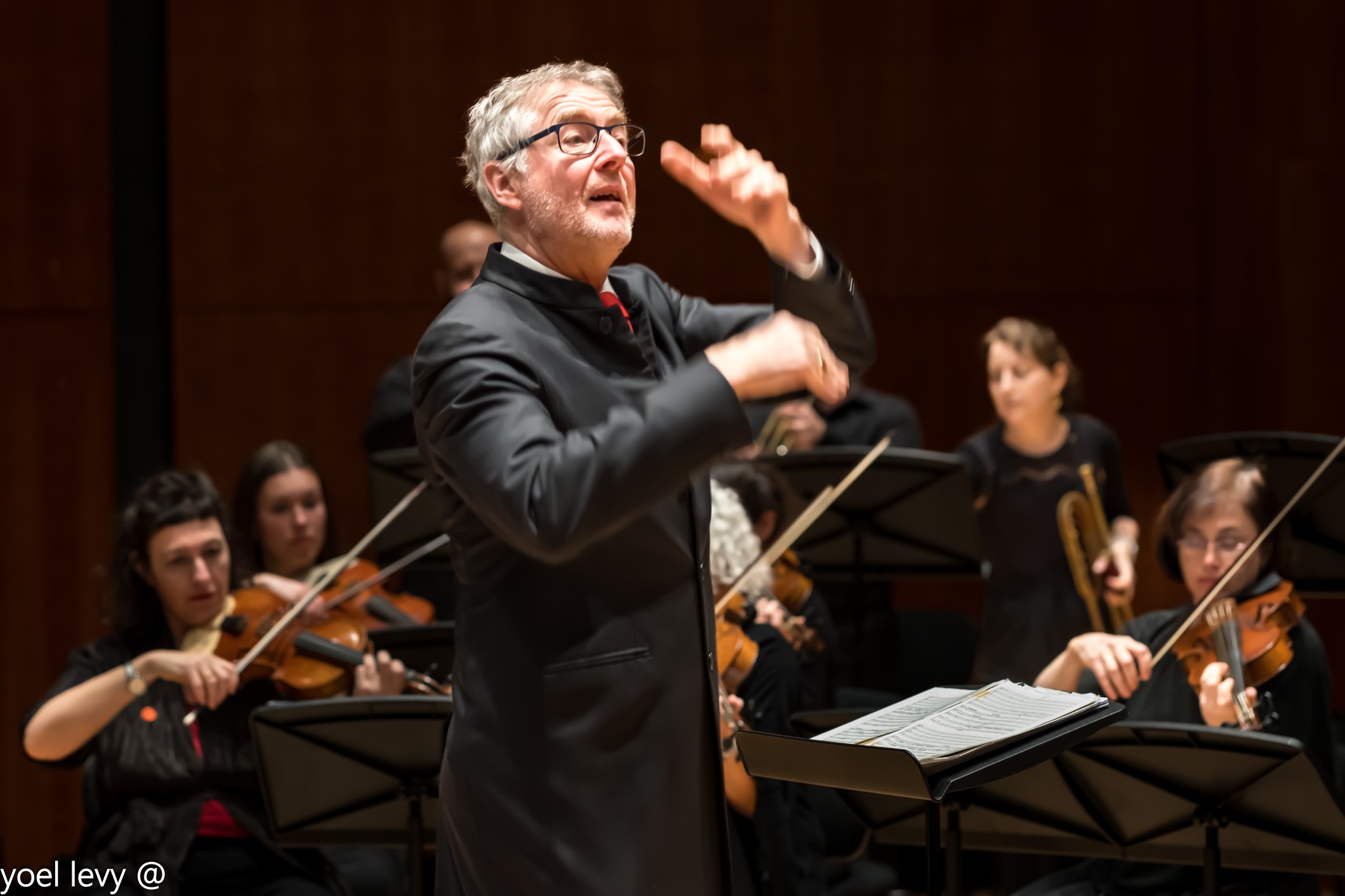
Myrna Herzog,Tali Goldberg,Marina Minkin,Noam Schuss,Yulia Lurye (© Yoel Levy)


Taking place at the Eden-Tamir Music Center, Ein Kerem, Jerusalem on May 10th 2024, "Bach in Italy", performed by members of Ensemble PHOENIX, together with its founder/director Dr. Myrna Herzog, was a celebration of the 25 years of this ensemble's existence.


It is a fact that such Baroque masters as Schütz, Froberger, Muffat, Handel and Hasse crossed the Alps to imbibe in the world of Italian music, its spirit and its secrets. Yet the composer who most fully perceived the Italian style was Johann Sebastian Bach, who had never even set foot in Italy. This he achieved through studying scores of Italian composers as of his childhood, beginning with the transcribing of concertos by Vivaldi and Marcello and then, through taking himself on a vivid (virtual) journey from Vivaldi’s Venice to Frescobaldi’s Rome. Bach’s transcriptions show an absolute technical mastery that was unprecedented at the time. Under its founder and director, Myrna Herzog, Ensemble PHOENIX, playing on period instruments, took the audience at the Eden-Tamir Music Center on such a journey. Performing the works were Noam Schuss and Tali Goldberg (violin), Yulia Lurye (viola), Marina Minkin (harpsichord) and Myrna Herzog (viola da gamba).


The event opened with Trio Sonata in B minor, Op.3 No.4 by Arcangelo Corelli, a work dating from the 1680s. Performing the "church sonata" (the term somewhat of a misnomer), the artists' lucid, intuitive playing highlighted the composer's idiomatic string writing, carried out with the dignity associated with the noble Roman academies for which the music was intended. Bach's Fugue in B minor on a Theme of Corelli probably dates from the early years of his Weimar period (1708-1717), during which he was the court organist in the service of the Duke of Sachsen-Weimar. Being of the canzona genre, the subjects are drawn from the second movement (Vivace) of the Corelli work that opened the concert. Adding a fourth part and greatly elaborating the fugal character, Bach clearly sought possibilities to align Corelli’s joie-de-vivre with the strict rules of German organ music, hence, its more serious (indeed, less Italianate) demeanour. With Bach's writing growing somewhat more animated by the brighter second half of the piece, the PHOENIX performance (arr. Myrna Herzog) traced the work's increasing, (however, subtly wrought) sense of tension. With articulate exposure of  each timbre, each voice, indeed, the clear enunciation of each inner voice, the listener was aware of the string quartet "hierarchy" of sound and no less of Bach's brilliantly-crafted fugal writing.


Bach’s works in variation form are few and far between. The "Aria variata alla maniera italiana in A minor", BWV 989 (Air varied in the Italian manner) is a keyboard work that was composed around 1709. It develops a theme by Domenico Zipoli (a composer known beyond the borders of Italy) in a series of ten variations (each in binary form). More proof of Bach's close study of contemporary Italian music (of Vivaldi, in particular) in the early years of his tenure as organist/concertmaster for the Duke of Weimar, the "Aria variata alla maniera italiana", a piece laced with invention and virtuosity, is the master's own take on the Italian style. Bach (an incurable recycler himself) would surely have delighted in the many arrangements that now exist of the work... including one for carillon! In Herzog's vivid setting for the specific ensemble for this event, she scores each section for a different combination of the instruments at hand, mixing timbres and colours, yet reminding us of the piece's genesis with several moments (including the whole of Var.V) devoted to the harpsichord alone. The artists' reading of the Aria featured some fine solo playing, pleasing embellishments, plenty of dialogue, imitation and playful gestures, to conclude in a majestic, cantabile fashion.


Another seldom-performed work on these shores is J.S.Bach's " Capriccio sopra la lontananza del suo fratello dilettissimo" (Capriccio on the departure of a beloved brother) BWV 992, from the composer's many single pieces that bear a diversity of titles. It was written at age 19, possibly to mark his brother Johann Jacob leaving to become an oboist in the army of Charles XII in Sweden (set in the key of B-flat major, it may refer to the family's name - "B" in German, B-flat in English); or it might have been intended as a farewell gesture to a friend. Bach's only piece of programme music (programmatic works of a kind being popular at the time) the style shows a different side of the great polyphonist. In its six short and imaginatively-titled movements, Myrna Herzog's setting of Bach's delightful and exquisitely-crafted keyboard piece creates a vivid canvas, its stage furnished with such associations as the postal coach's horn but also with a gamut of emotions. In the lamenting Adagissimo movement (a passacaglia originally in the "prophetic" key of F minor, here in C minor) Schuss and Herzog evoke a sense of grief at the young man's imminent departure, as the movement concludes in the minimal gestures of just a few brush strokes.


Then to Trio Sonata Op.1 No.8 of Tomaso Albinoni. Albinoni's Op.1 collection was published in Venice in 1694, when the composer was 23 years old (at which time, he referred to himself as an "amateur Venetian violinist".) The PHOENIX artists' playing conveyed lucidity, offered tasteful ornamenting, the appealing delivery of melodies and melodic shaping and the addressing of dissonance… performance displaying a sense of shared purpose. The esteem in which Albinoni's instrumental music was held is reflected in the fact that J.S.Bach borrowed certain themes from Op.1 as subjects for a number of his fugues, one such being the Fugue in B minor BWV 951, which  is based on thematic material from the 2nd movement (Allegro) of the above Albinoni trio sonata. Marina Minkin gave a dedicated and informed performance of the fugue (2nd version), an extensive work, whose richly balanced harmonic plan and formal- and tonal refinement would point to the fact that it belongs to the composer's second decade of keyboard compositions.    


Once again, the experience acquired by Bach through his careful transcriptions is reflected in the Italian Concerto, a work that might be defined as a keyboard arrangement of a virtual and imaginary Italian orchestral model. The Italian Concerto is unique among Johann Sebastian’s compositions, being a concerto in the Italian style for solo keyboard, without orchestra. Originally titled "Concerto nach Italiænischen Gusto" (Concerto in the Italian taste) in F major, BWV 971, the three-movement work, composed for two-manual harpsichord solo, was published in 1735 as the first half of Clavier-Übung II. One of Bach's most loved works, it has served as the blueprint for many settings, among them being for harp, for two harps, for piano, for orchestra, flute and alto flute, flute and piano, string quartet, three recorders, soprano saxophone and piano and for saxophone quartet. The arrangement made by Myrna Herzog and Marina Minkin endorses the twofold task Bach had set himself -  that of simulating the two contrasting ensemble forces of the concerto grosso model and presenting the exuberant spirit of the Italian model. (Supporting the former, Bach supplied many indications for piano and forte dynamics.) The PHOENIX setting calls into play contrasting string- and harpsichord textures and gestures, bringing out voices, indeed, inviting the harpsichord to be the solo instrument in its own concerto. To the pared-back ostinato accompaniment, Noam Schuss' playing of the D-minor slow movement, so string-like in its lengthy melodic contour, was wonderfully sculpted and moving. 


Invariably well researched and of a high artistic standard, PHOENIX performances never fail to introduce the listening public to works rarely (or never before) heard here. As to  how Bach went about familiarizing himself with Italian music (the thread running through the "Bach in Italy" concert) perhaps today's music education institutions should encourage students to find the time and patience to experience his methods. 


As Myrna Herzog will presently be returning to Brazil, this was Ensemble PHOENIX' last concert in the present format of four to eight programs a year. Over the last 32 years, Dr. Herzog's contribution to the Israeli early music scene has been immense, as has been her teaching of the viola da gamba. Concert-goers will be pleased to know that Dr. Herzog will lead annual performances of Ensemble PHOENIX on Israeli concert platforms in the future.  


Monday, April 29, 2024

FULL MOON - a new CD in which Michael Tsalka and Diana Weston present Classical- and contemporary works on square piano and harpsichord


Diana Weston & Michael Tsalka (Diana Blom)


A new CD, one that will appeal to those interested in music for early keyboards is FULL MOON.  Diana Weston (Australia) and Michael Tsalka (Israel-China), perform works for duet/4 hands on square piano and harpsichord - music from the Classical period as well as three contemporary Australian works. 


The opening work is Sonata in A major for piano forte four hands Op.XVIII/5 by Johann Sebastian.Bach's 11th and youngest son, Johann Christian. Sometimes referred to as the "London Bach" due to his time spent living in the British capital, this Bach son is highly acclaimed for his keyboard works and credited as being the first to perform publicly in London on the fortepiano. Tsalka and Weston's reading of the work of 1781 (or earlier), and cast in the composer's favoured binary sonata format, highlights J.C.Bach's typically cantabile melodies. In the opening Allegretto, the artists give new colour to each small phrase even fleetingly visited in a new tonality, as they engage in dialogue and some splendid ornamentation. Here we meet the vivid, resonant timbral depth of the square, an instrument that was becoming prevalent in the homes of the well-heeled for domestic music-making. The artists' playing of the unpretentious second movement (Tempo di Minuetto) emerges precise and sincere.


Remaining in the same key and in the 4-hand setting, also played on the Robertson square piano (c.1835, Liverpool), we hear Sonata II in A major for four hands Op.32 by Czech composer Johann Baptist Wanhal (1739–1813) who, from around 1780, seems to have redirected his attention from large-scale instrumental music towards repertoire for the middle classes. Duets were a popular genre of house music, whether for recreation, musical soirées, didactic purposes (Wanhal was a highly respected teacher of voice, violin and piano among the Viennese nobility) or (via arrangements) for the familiarization of symphonic works. With its musical figures stated in a clear and self-referential manner, indeed, with freshness, the artists give a cheery, diligent rendering of the opening movement's theme and variations (Adagio alla Francese, Varazione alla Italiana), with no "minore" variation present to unsettle the prevailing sense of well-being. Offering variety and contrast, their playing of the Rondo alla Tedesca/Allegro gives the stage to its unadulterated joy, its folk-like dance melody and moments of whimsy. The square piano's forthright, slightly wild timbre invites the artists to engage in the joy of music-making and in the pianistic approach abounding in the work. 


And to another domestic piece for use among close friends. In 1799, Beethoven wrote a setting of Goethe’s "Ich denke dein" (I think of thee) and four variations for piano 4 hands for two pupils - the Countesses Therese and Josephine Brunsvik. In 1803, he added two more variations, publishing the song and variations in 1805. Singing the first stanza of this love song, we hear Angélica Minero Escobar. Then, following the warm-hearted instrumental theme itself, Weston and Tsalka connect and exchange ideas as they play out the agendas of those variations that are sunny and amiable and of those of a more searching and pensive nature. And here, there is indeed a "minore" variation, darker and more intense in colour, then to be chased away by the final variation, one brimming with the felicity and sunshine of the D major tonality. Indeed, this work and its tonality reflect an all-too-rare carefree, happy time in the composer's life. As to the possibility of a tender, underlying message in this charming, small piece, Beethoven’s affection for Josephine was expressed in a passionate letter later in his life. 


The disc includes two works by Australian composer Ann Carr-Boyd (b.1938), in whose oeuvre the harpsichord figures prominently. "Moonrise over Lake Argyle" (a commissioned work), here performed on square piano (Tsalka) and harpsichord (Weston), depicts nature scenes at Lake Argyle, a massive, man-made reservoir located in Western Australia. Carr-Boyd's own (penned) description of each of the scenes guides the listener through the seamless continuum, in which two seemingly incompatible keyboard instruments create captivating tableaus using modal-type diapasons. Via Carr-Boyd's integration of timbres and her accessible musical language, Weston and Tsalka engage the two instruments in conjuring up vivid musical images of birds, of darting fish, lapping water, the setting sun and the moon, that render this location inspiring, mysterious and magical.


Carr-Boyd's "Stairway to the Moon" (2019) exists in a number of settings, these including settings for piano solo, piano duet and for clarinet and piano. On this disc, we hear the arrangement for harpsichord (Tsalka) and square piano (Weston). Before hearing the work, the listener should be informed that the Stairway to the Moon is a natural phenomenon caused by the rising of a full moon reflected on the exposed mudflats in Roebuck Bay in Western Australia at low tide, creating an optical illusion of a stairway reaching up to the moon. People traveling to the region to observe the phenomenon wait at the Mangrove Hotel, where they are entertained by a jazz pianist on a honky tonk piano. Weston and Tsalka bring to life the work's bold and varied canvas, one alternating between the honky tonk pianist's devil-may-care delivery and a sense of awe and wonder at the rare, visual spectacle nature is offering. The composer's score also makes reference to the didgeridoo (in the bass) and the clap-stick. Indeed, in both these works, Carr-Boyd pays homage to the indigenous people of each region, their beliefs and rich cultural heritage.


We remain in the Antipodes. Born in New Zealand in 1947, composer/keyboard artist Diana Blom today makes her home in Sydney, Australia. Composed at the request of Diana Weston and Michael Tsalka, Blom's "Night Music" for two single-manual harpsichords takes artists and listener on a tonal-modal, tango-flavoured journey into the night. Forget about the tranquillity of night! Intense and loaded with unflagging energy, somewhat relieved temporarily in the more pared-down middle section, Blom's piece, with its references to bird- and animal sounds, comes across as spontaneous, entertaining and unpredictable, at times jocose. "Night Music" is performed on harpsichords by Marc Ducornet and Zuckermann. 


Dr. Weston and Prof. Tsalka have recorded and performed together for some years. Their teamwork is consummate. In "Full Moon", another of their interesting and unique projects, one is aware of the artists' interest in the wide and expanding range of repertoire for early keyboards. As to the history of early keyboard instruments in Australia, Diana Weston writes in the liner notes: "Australia, isolated as it was and lacking external entertainment, imported square pianos by the hundreds, (even surpassing that of Europe), so significant were the pianos as the central hub of the home and society generally." In fact, she told me that there was a tiny square piano on the Sirius, in the first fleet to Australia! 


Recorded at Naremburn, New South Wales, Australia in November 2023 for the Wirripang label, the disc's recording sound is genuine and lively. 


Saturday, April 6, 2024

Mozart in Prague - the Israel Camerata Jerusalem performs works of Zelenka, Mozart and Tzvi Avni. Conductor: Avner Biron; soloist: Juan Pérez Floristán

Tzvi Avni (tzviavni-composer.com)


Juan Pérez Floristán ©Yoel Levy


The Israel Camerata Jerusalem is currently celebrating its 40th anniversary. Taking place at the Tel Aviv Opera House on March 26th 2024, "Mozart in Prague", an event of the orchestra's InstruVocal Series, was conducted by its founder/musical director, Maestro Avner Biron. Soloist was Spanish pianist Juan Pérez Floristán, winner of the 2021 Arthur Rubinstein International Piano Master Competition.


Setting the geographic scene was Concerto à 8 concertanti by Jan Dismas Zelenka (1679-1745). Born in a market town southeast of Prague, Zelenka's career took him to the Dresden court of Friedrich Augustus the Strong, Elector of Saxony and King of Poland, where he served as a double bass player and composer.  Primarily a vocal composer, Zelenka's instrumental works mostly date from around the time the composer was apprenticed to Johann Joseph Fux. The Camerata's reading of Concerto à 8 highlighted the composer's contrapuntal mastery and harmonic inventiveness (qualities admired by contemporaries J.S. Bach and G.P.Telemann!), the performance also offering interest and variety in the many solo passages and dialogues performed by orchestra members, to the delight of the audience.


Soloing in W.A.Mozart's Piano Concerto No.20 in D minor K.466, Juan Pérez Floristán (literally) joined the Camerata players in a performance to remember. One of only two Mozart concertos in a minor key (and the stormier of the two) Floristán addressed the darker, dramatic elements of the 1st movement (Allegro) with rigour and pathos rather than with furore. Added to that were much poignancy and luminosity, crisp fingerwork, unburdened pedalling and finely contrasted dynamics. As to the Beethoven cadenza Floristán chose for the 1st movement (Mozart left no cadenzas to the work), the pianist took the listener through a range of gestures, from the most intimate and delicate to full-on, rich piano textures. Both artist and orchestra lavished the 2nd movement (Romanza) with empathy, the soloist eloquently threading melodies through the weave. Floristán's playing of the stormier middle section emerged intense, the movement's closing feather-light ascending arpeggio then to fade away to a faint whisper. In the final movement, the soloist gave expression to its variety of moods, transitioning naturally from touch to touch and engaging in playful banter with the woodwinds as he addressed the shape of each tiny detail of the Mozart score. Choosing András Schiff's cadenza for the Rondo, Floristán captivated the listener with its variety, rich voice-play and grace. The concerto's first performance took place at the Mehlgrube Casino in Vienna on February 11th 1785, with the composer as the soloist. In a letter to Nannerl (Mozart's sister), Leopold Mozart wrote of the event: "We had a new and very fine concerto by Wolfgang, which the copyist was still copying as we arrived, and the rondo that your brother did not even have time to play through, as he had to supervise the copying.” Although not performed on period instruments, the modest size of the Israel Camerata Jerusalem, together with Floristán's fine-spun handling of the text made for a personal and moving Mozart experience.


For his encore, Juan Pérez Floristán (b.1993) performed Debussy's "Girl with the Flaxen Hair", his rendering of the musical "portrait" discerningly paced, evocative and lush. 


Tzvi Avni (b.1927,Saarbrücken, Germany, in Israel since 1937) composed four string quartets over nearly sixty years; the most recent of them - "About These Days" (2021) - was first performed in Germany. At the request of Maestro Biran, Prof. Avni arranged the piece for string orchestra. This was the setting heard at the Tel Aviv concert. A single-movement work of no defined musical form, it gives expression to the anxiety pervading the general mood during the Corona pandemic. Opening with dense eighth- and sixteenth-note chords established in the two opening measures, the second, melody-based subject forms a strong contrast to it. There is no mistaking the dark, introspective message of the piece, with its plangent solos, its mood as relevant today as when it was  written. The Camerata string players gave a dedicated, affecting performance of the piece, its tension here and there giving way to freer-flowing passages, the work then drawing to an end on a major chord. The composer was present at the performance.


Reconnecting with the evening's theme, Maestro Biron and the Camerata players concluded the event with a substantial testimonial to the Bohemian connection. W.A.Mozart's music was all the rage in Prague at the end of 1786. Bringing Symphony No.38 in D major ("Prague") K.504 with him from Vienna, the composer travelled to Prague in early 1787, where it was to be premiered. Although not actually composed there, the lavish use of wind instruments in this symphony takes into account that the wind players of Bohemia were famed throughout Europe. With his symphonic style at its most sophisticated, the work also marks the beginning of a late period in Mozart’s symphonies, showing him pushing at the bounds of the symphonic form (there is no Minuet). Together with its darker moments, its complex counterpoint with a rich array of voices and the play of smaller instrumental groups as against larger, the Camerata performance left no doubts as to the references Mozart was making to his written- and not-yet-written operas.  A symphony for connoisseurs, K. 504 reflects the taste and discernment of the audience for which it was intended. Here, in Tel Aviv, energy and lyricism abounded, sparkling virtuosity, and humour, as did opportunities to enjoy the orchestra's fine wind playing. 


Maestro Avner Biron (Courtesy JAMD)


Saturday, March 30, 2024

The 2024 Bach Festival (director: David Shemer) - interest, variety and excellence in Jerusalem and other centres


Maestro Paul Goodwin © Yoel Levy

Inclement weather was no deterrent to those people arriving at the Jerusalem International YMCA on March 18th 2024 to see in Bach Festival VIII, an annual festival under the auspices of the Jerusalem Baroque Orchestra and directed by JBO founder and music director Prof. David Shemer. Guests were greeted with a glass of red wine and invited to take their seats to the familiar sounds of Prelude in C major from Book 1 of J.S.Bach's Well Tempered Clavier as played on the harpsichord by Jonathan Berk. JBO CEO Gilli Alon welcomed guests to the event, expressing her thanks to YMCA personnel for their help in the project. Her words were followed by Maestro Shemer, who talked of the Bach Festival as having started out as an experiment, then to be established as a permanent fixture in Israel's cultural life. He spoke of the main event of this year's festival - "Drums & Trumpets" - the Secular Cantatas - as featuring two of Bach's less-familiar cantatas, the works being played on period instruments…including early trumpets. Shemer made reference to the JBO's ongoing cooperation with the Bach House (Eisenach, Germany), whose director Dr. Jörg Hansen was present at the opening, once again bringing an exhibition relevant to the theme of the festival from this unique museum in the town of Bach's birth. Present at the Jerusalem Bach Festival for the seventh time, Dr. Hansen spoke of many of Bach's secular cantatas - all composed for weddings, birthdays, name days and funerals – being lost, with only about 25 of them surviving in their entirety. Hansen drew our attention to a display case showing books of poetry of Picander. (Christian Friedrich Henrici, writing under the pen name Picander, was a poet and librettist for many of the cantatas Johann Sebastian Bach composed in Leipzig.)  Performing on a copy of a Duicken harpsichord (Klop, 1983), Jonathan Berk brought the event to a close with a selection of Bach's chorale preludes (one version by Bach's pupil Johann Ludwig Krebs) and an early seldom-heard suite of the master. Berk is presently studying in Graz, Austria. Displaying technical competence, his playing unfolded with a sense of discovery, giving expression to the rich variety of writing found in the preludes, to their complexity and their potential for embellishment and cantabile playing. Both reflective and intense, Berk's delivery attested to the dialogue present between artist and instrument that is elemental to this repertoire.


What was most appealing about "Drums & Trumpets" - the Secular Cantatas, the main event of this Bach Festival (attended by this writer on March 20th at the Jerusalem International YMCA) was its distinctive programming. For each of the main festival programs over the years, the Jerusalem Bach Festival has featured several of the larger sacred works - the St. Matthew Passion, the St. John Passion, the Magnificat, to mention just three - but this year's festival presented two of Bach's secular cantatas. Guest conductor was Paul Goodwin (UK), with soloists soprano Keren Motseri (Holland/Israel), countertenor Hamish McLarin (UK), tenor Richard Resch (Germany) and Israeli baritone Guy Pelc. However, the "apéritif" to the cantatas was a feature no less invigorating - a selection of instrumental movements from Bach's Easter Oratorio and from three of the cantatas. With Paul Goodwin at the helm, the JBO instrumentalists gave fresh and vivid expression to these pieces, delighting the audience with the music’s variety of mood and timbral interest, the latter enriched and enlivened by fine wind playing. As to the two cantatas, we unexpectedly found ourselves hearing music familiar to us from other Bach works. Bach the recycler was at it again. "Tönet, ihr Pauken! Erschallet, Trompeten!" (Resound, ye drums! Ring out, ye trumpets!) BWV 214 (Bach reused parts of this cantata a year later for the first- and third cantata of the Christmas Oratorio) was composed in 1733 for the birthday of Maria Josepha, Queen of Poland and Electress of Saxony. Bach had led the Collegium Musicum in the first performance of it at Café Zimmermann in Leipzig that same year. The librettist is unknown. The text's interaction occurs between four allegorical goddesses from Roman- and Greek mythology: Bellona, a Roman goddess of war (Keren Motseri), Pallas, a Greek goddess of wisdom (Hamish McLarin), Irene, a Greek goddess of peace (Richard Resch), and Fama, a Roman goddess of fame (Guy Pelc). Joining them to sing the choruses were Naomi Burla-Levy, Doreen Sassine, Jamil Freij and Roi Witz. Although we today would not recognize the allusions and metaphors referring to the latent political program of the piece (indeed, obscure to anyone but its Saxon audience of 1733), the Bach Festival performance (both soloists and instrumentalists) gave a polished reading of it, bringing to life the musical gestures and verbal descriptions embedded in the text of this dramma per musica. 


Apart from the recitatives, "Auf, schmetternde Töne der muntern Trompeten" BWV 207a (Arise, blaring tones of high-spirited trumpets) is a parody on BWV 207, meaning that the original setting - a celebration of the inaugural lecture of a professor of law - was transformed by Bach into an exalted ode to Friedrich August II, praising the virtues of the Elector and referring to the ensuing prosperity of his subjects on the occasion of Friedrich August’s name day. The trumpets and timpani, scored here to add festive colour, energy and joy to the work, are present from the first line and the listener was quick to recognise Brandenburg Concerto No.1 in the opening chorus. With the customary references to ancient antiquity, August is honoured mainly in his capacity as Elector of Saxony, although reference is also made to his Polish kingdom in the final recitative. The performance's fine vocal soloing was met with no-less splendid obbligato playing on the part of JBO players.


Bach Festival VIII concluded with "Whom Have I in Heaven but You", an evening of northern German Baroque music, music of composers who had paved the way for Johann Sebastian Bach. Taking place in the agreeable Conference Hall of the Jerusalem YMCA on March 23rd, the event featured tenor Richard Resch (no new face to Israeli concert audiences), violinists Noam Schuss and Yulia Lurye, Sonia Navot (viola da gamba) and David Shemer (organ). Resch referred to this repertoire as music full of feelings - some darker, some brighter in mood - works expressing sadness, faith and hope. The event opened with a full-bodied, sonorous reading of "Herr, wenn ich nur Dich habe" (Whom have I in heaven but You?) from Cantata BuxWV38 of Dietrich Buxtehude. Resch spoke of the aria "Wein, ach wein" (Cry, oh cry), from a Passion by Danish-German organist/violinist/ composer Nicolaus Bruhns, as a piece expressing Peter's disconsolateness at having betrayed Jesus, as a piece embodying the "quintessence of sorrow". Joined by Shemer and Schuss, Resch performed it with profound feeling. Endorsing and reflecting the intense grief intrinsic to the piece, Schuss' eloquent playing gave rise to some splendid ornamenting. Johann Mattheson's oratorio "Der liebreiche und geduldige David" (The affectionate and patient David,1723) was recently rediscovered amongst works lost during World War II (now restored to Hamburg.)  It is set during the elderly King David’s civil war with his estranged son Absalom and climaxes with the king’s lament for his dead son. With organ and viol offering an intimate, reflective setting for the lament, Resch's performance of “Ach Absalom! Mein Sohn” (Oh Absalom! My son!), with its searching, disquieting short pauses, was imposing and heartrending. 


As to the instrumental items on the program, the players' diligent reading of two sonatas from Johann Heinrich Schmelzer's "Duodena Selectarum Sonatarum" (Nürnberg, 1659) re-created something of the experience offered to guests at a typical evening of entertainment held at the Habsburg Court. In this, the composer's first large chamber music collection, the viola da gamba is on a par with the violin. From the early 17th century, the Viennese court was under the spell of the Italian style. The Schmelzer sonatas show a wide variety of influences, though the Italian influence is the most apparent. They reflect an age of experimentation and compositional freedom. Similarly, the JBO players' expressive and finely sculpted playing of Sonata Secunda from "Sonatae a 2, 3, 4 e 5 stromenti da arco et altri" (Nürnberg, 1682) of Johann Rosenmüller clearly shows the influence of the years the composer spent in Venice. 


Ending on an optimistic note, the artists performed "Redet Untereinander" (Speak among Yourselves), a typical early 18th century North German cantata, composed by Gottfried Philipp Flor. It is thought that J.S.Bach was acquainted with compositions of his father, Christian Flor, during his stay as a student in Lüneburg and may have been influenced by them. Some sources quote Bach as having known the elder Flor personally. The artists took on board the vivid, celebratory canvas of this new year cantata, highlighting its marvellous string writing. Resch gave articulate, vigorous esprit to the text, with its richly descriptive passages. 


The YMCA Conference Hall was the ideal venue for this unique program, its lively acoustic calling attention to the timbres of the instruments, the instrumentalists’ splendid playing and to the fresh, warm, easeful flow, the natural resonance of Richard Resch's singing and his deep enquiry into the texts.  


Richard Resch (Martin Lee)

Saturday, March 2, 2024

"Mendelsson's Birthday" - the Israel Chamber Orchestra in an all-Mendelssohn program in Tel Aviv. Conductor: Roberto Forés Veses. Guest pianists: Sivan Silver, Gil Garburg

Roberto Forés Veses (Courtesy ECO)

Gil Garburg, Sivan Silver (silvergarburg.com)


Seeing the Recanati Auditorium of the Tel Aviv Museum of Art packed to capacity on February 22nd 2024 was proof that the Israel Chamber Orchestra's all-Mendelssohn concert was of great appeal to the concert-going public and that "Mendelssohn's Birthday" (February 4th) was a celebration not to be missed. Conducting the ICO was Roberto Forés Veses (Spain-France). Guest artists were Sivan Silver and Gil Garburg (Israel-Germany, Silver-Garburg Piano Duo).


Felix Mendelssohn's one-act Singspiel "Heimkehr aus der Fremde" (1829) ("Son and Stranger" or "Return of the Roamer") might be considered "musica rara" by most audiences. The composer wrote the light opera (a comedy of mistaken identities) to be played at his parents' silver wedding anniversary celebration. The Tel Aviv concert opened with its Overture Op.89, the ICO's playing underscoring the piece's charm and wit with lush and expressive playing. Then, to more familiar repertoire.  In 1842, Mendelssohn was commissioned by the King of Prussia to provide incidental music for a production of Shakespeare's "A Midsummer Night's Dream". Mendelssohn seems to have had no trouble in creating music depicting the world of fairies and human lovers. In a letter, his sister Fanny had written: “We have really grown up together with the 'Midsummer Night’s Dream' and Felix, in particular, has made it his own." Forés Veses and the ICO players performed two of the eleven pieces: the Intermezzo (between Acts II and III) lively, featherweight and restless, depicting Hermia's agitation as she searches for her lover Lysander lost in the wood. The Nocturne, describing Puck’s magical control over the befuddled quartet of lovers as they sleep in the forest, features one of Mendelssohn’s finest and most poignant horn solos (here, with a couple of "clams"), the horn sound evoking the warm serenity of a summer night. I always enjoy the fine, glowing quality of the ICO's wind players. With winds cardinal in Mendelssohn's instrumental music, the players' rich timbres were prominent throughout the concert.  


Mendelssohn was thirteen when the family left Germany to spend two years in Switzerland. There, Felix produced four string symphonies, a violin sonata, a piano quintet, the early C Minor Symphony, a double concerto for violin and piano and the two concertos for two pianos, the latter probably written with his sister and himself in mind. The first private performance of the E Major Concerto took place at one of the Sunday concerts taking place at the Mendelssohn house in Berlin. Written at age 14, it was regarded as immature by the budding composer. Hence, it was set aside and not published. Remaining in manuscript until 1961, the Leipziger Ausgabe der Werke Felix Mendelssohn Bartholdy issued a version substantially revised by Mendelssohn himself and edited by Karl-Heinz Köhler. At the ICO concert, Sivan Silver and Gil Garburg's handling of the piano roles - of the two pianos with each other and with the orchestra - highlighted Mendelssohn's astonishing creativity and flair, reminding the listener that the adolescent Mendelssohn was already the great melodist of the "Songs without Words", au courant with the German virtuoso piano school and on the verge of artistic maturity. In this sparkling, untroubled work, brimming with youthful vivacity, the composer skilfully weaves darker colours into the music to create contrasts, as heard in the delectable slow movement which was spelled out with warmth, elegance and grace. Altogether, Silver and Garburg engaged in spirited and imaginative interplay, the latter allowing for their individual personalities to shine through. They thrilled the audience with the dashing scales, arpeggios and fleet-footed figurations (albeit articulately enounced) in the final movement.  Add to these the ICO's sympathetic strings and delightful wind playing. For their encore, Silver and Garburg played the sprightly Scherzo from Mendelssohn’s own four-hand (one piano) transcription of the incidental music to "A Midsummer Night's Dream". 


In October 1830, Felix Mendelssohn travelled to Italy, remaining there for ten months. Impressions of the trip remain in a series of watercolours and sketches he produced, but also in Symphony No.4 in A major Op.90, "Italian". Apart from the final movement, the symphony is not Italian music as such; rather, it puts into sounds the composer's response to the congeniality of Mediterranean sunshine (Mendelssohn referred to the symphony as a “blue sky in A major”), to Italy's religious solemnity, monumental art and architecture and to the beauty of the Italian countryside. Roberto Forés Veses led the ICO instrumentalists through the work in all its luxuriance, grace and flavours, his uniquely definitive and elegant conducting language addressing the score's gestures and minutest details, summoning up the forthright joy and immediacy of the opening Allegro vivace, the wistful ambiance of the Andante con moto (recalling processions Mendelssohn had witnessed in Rome) and presenting a finely-shaped and supple reading of the Minuet (Con moto moderato). With the raucous Neapolitan saltarello as its basis, the final movement was a scene of joyful abandon, hurtling to a close with a minor-key reiteration of the first movement’s opening theme. 


Felix Mendelssohn died before reaching the age of 40. One can only speculate what musical riches were denied the world by so tragically early a demise.