Thursday, January 13, 2022

"Viennese Classics" - the Jerusalem Baroque Orchestra performs works of Mozart and Beethoven on instruments of the Classical period. Conductor: David Shemer. Soloists: Tom Ben Ishai, Yaron Rosenthal

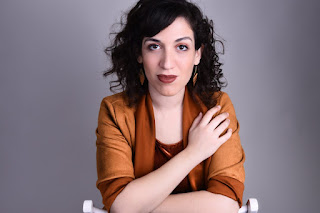
Tom Ben Ishai (Uri Elkayam)


Yaron Rosenthal (jamd.ac.il)


Concert No.3 of the Jerusalem Baroque Orchestra's 33rd season marked a new and decidedly exciting shift for the ensemble. Introducing "Viennese Classics", JBO founder and artistic director Prof. David Shemer informed the sizable audience gathered at the Jerusalem International YMCA on January 9th 2022 that the Mozart/Beethoven program would be performed on instruments typical to the Classical period - authentic woodwinds and brass, with string players using Classical bows. Indeed, the keyboard instrument for the evening would be a fortepiano. Conducting the concert was David Shemer, with soloists Yaron Rosenthal-fortepiano and soprano Tom Ben Ishai.


Wolfgang Amadeus Mozart composed the Divertimento in D major K. 136 for strings in Salzburg in the winter of 1772. Busy working on "Lucio Silla", a new, ambitious opera to be premiered in Milan, writing the Divertimento, K. 136 must have served as a means of releasing surplus energy for the 16-year-old composer. From the very first sounds of the vibrant opening Allegro, the JBO string players' genial, velvety timbres and minimal use of vibrato transported the listener into the ambience of a musical soirée taking place in the drawing room of one of Salzburg's leading residents, venues at which Mozart frequently performed on both keyboard and violin. The Baroque Orchestra's precise, unmannered playing allowed for the work's shape, charm, its effervescence and subtle surprises to surface, the warm, elegant Andante movement followed by the spirited Presto finale, bringing the Divertimento, a fine example of  an ambitious work in a genre traditionally designated as "light" music, to a close.


Concerts in Mozart’s day always included a vocal element. His concert arias were occasional works to be inserted into his own operas, those of other composers, or simply composed for singers who possessed voices he particularly admired. In the latter case, they were tailored to the range, ability, tonal- and dramatic qualities of those singers. The concert arias are small, dramatic set pieces which, almost invariably, borrow their words from full-length opera libretti. Taking its text from "Ezio", "Misera! dove son…Ah! non son io" K.369 (Ah! It is not I who speak) was composed in 1871 for Countess Josepha von Paumgarten, a 19-year-old amateur singer. Young Israeli-born opera singer Tom Ben Ishai issued in the recitative with restraint, its course becoming somewhat more agitated as it. progressed. In the aria proper, offering brief ornamental flourishes and dynamic changes, Ben Ishai's beauty of tone coloured sustained notes as she engaged easefully in its wide intervals and dramatic leaps, portraying the character’s frenzied mental state. And how lush the instrumental canvas sounded, scored for two violins, two violas, basso, two flutes and two horns. 


Another concert aria "Ch'io mi scordi di te? Non temer, amato bene" K.505 (Should I forget you? Fear nothing, my beloved) is unconventional in that it was written for the combination of solo voice, piano obbligato and orchestra. Mozart composed it in 1786 for English soprano Nancy Storace, who had sung the role of Susanna at the premiere of "The Marriage of Figaro''.  He created the complementary piano part, a farewell to Storace, for the concert aria which he and Storace performed together in early 1787, shortly before her departure from Vienna.  A work bearing a clearly strong personal element, the piece -  a unique sort of duo concertante, the only one of its type in Mozart’s oeuvre -  is the melding of an opera aria and piano concerto. (In Mozart's own thematic catalogue, it is labelled "Für M'selle Storace und mich," which might indicate a sympathy between them that went beyond art! ) Lush in its instrumental scoring for 2 clarinets, 2 bassoons, 2 horns, and strings, with solo piano, the ambience is one of warmth and tenderness, well reflected in Ben Ishai's musical and well-shaped rendering of the piece, music indeed sympathetic, with plenty of give and take between singer and fortepiano (Yaron Rosenthal). The sound of the handsome fortepiano (Chris Maene, Ruiselede, Belgium), not built for the likes of the large concert hall, however, emerged as well-defined, its mellifluous timbre intimate and beguiling, adding its unique colours to the orchestral web. Mozart never saw Nancy again; yet he regularly wrote her letters, which regrettably have been lost.


And, to an auspicious occurrence in the history of the Jerusalem Baroque Orchestra - the ensemble's first performance of a work of Ludwig van Beethoven and one to challenge the concepts long ingrained in the minds of concert-goers. Listening to Beethoven's Piano Concerto No.1 in C major Op.15 at this concert, the listener was obliged to put aside the pompous sound world of the large symphony orchestra and the modern Steinway grand. We meet the 29-year-old Beethoven juxtaposing the inherited styles of his predecessors and Classical models with his own musical ideas, forms and taste, a Beethoven not yet beset by the crisis that would be brought about by his gradual loss of hearing. Maestro Shemer offers us the opportunity to embrace the leaner proportions of the historic Classical chamber orchestra, with the JBO instrumentalists' lightness and transparency setting off the robust but mellow brass instruments and silvery sounds of the fortepiano. In fact, once the ear had adjusted, the wealth of details emerging from orchestra and keyboard was rewarding, to say the least, with orchestra and soloist sustaining a balance that was precise and unfaltering. Rosenthal was clearly on home territory, with playing that was delicate, richly coloured, hearty, agile and tastefully flexed. It was all enjoyment on his part and ours and an elevating experience to hear the work in the more personal proportions with which the composer would have been familiar. Totally magical!


Prof. Yaron Rosenthal is a leading Israeli pianist, combining an international career as a soloist and chamber musician. He is the pianist of the acclaimed Jerusalem Trio and a senior faculty member at the Jerusalem Academy of Music and Dance. A graduate of the Jerusalem Academy of Music and Dance and the Israeli Opera's Meitar Studio, Tom Ben has won several awards. Launching a solo career, she is also a member of the Cecilia Ensemble and the Israeli Vocal Ensemble


Saturday, January 8, 2022

The Silver-Garburg Piano Duo sees in 2022 with a performance of works by Rimsky-Korsakov, Schubert and Brahms at the Israel Conservatory, Tel Aviv

Gil Garburg, Sivan Silver (courtesy Silver-Garburg Duo)


2022 started "on the right foot" with a recital of the Silver-Garburg Piano Duo at the Israel Conservatory (Tel Aviv) on January 1st. The concert, of the Piano Recital Series, comprised works of Rimsky-Korsakov, Schubert and Brahms. Israeli artists Sivan Silver and Gil Garburg today reside in Berlin.


Guiding performers as to the subject matter of "Scheherazade", Symphonic Suite, Opus 35 (1888), a work inspired by a collection of Middle Eastern and Indian tales, known as "The Thousand and One Nights" (or "The Arabian Nights"), Nicolai Rimsky-Korsakov prefaced his score with the following: "The Sultan Shahriar, convinced of the duplicity and infidelity of all women, vows to slay each of his wives after the wedding night. The Sultana Scheherazade, however, saves her own life by the expedient of telling the Sultan a succession of tales over a period of one thousand and one nights. Overcome by curiosity, the monarch postpones his wife's execution from day to day, then altogether renouncing his sanguinary resolution." However, while programmatic elements are undoubtedly present in "Scheherazade" and important to the shaping of the work, the music was not intended as an exact portrayal of any particular tale or any part of the collection. Indeed, the composer wanted the listener to "carry away the impression that it is beyond doubt an Oriental narrative of some numerous and varied fairy-tale wonders"... Scored for strings, harp, several woodwinds, brass and a variety of percussion instruments, the music of "Scheherazade" showcases Rimsky-Korsakov’s mastery as an orchestrator; in terms of the pure, sensory pleasure of sound and of the rich array of instrumental solos, he is unsurpassed. Performing the four-hand piano setting of the work presents a challenge to both players and listeners. Introducing this "story about a storyteller", Silver and Garburg present the two main characters with their own specific themes - the Sultan, his arrival announced by a bold, brash theme, to be answered by that of the mesmerising Scheherazade, the characters at the centre of these tales of love, intrigue and adventure. In playing that is finely chiselled, wonderfully clean, carefully paced, descriptive and imaginative, the artists take the audience east on an exhilarating journey into a fairy-tale world. Under their fingers, the action-packed work of four tableaus emerges richly textured, dramatic and evocative, but also intimate, only drawing to a close when Scheherazade’s stories finally come to a quiet and plaintive end. Listening to the third movement - "The Young Prince and the Young Princess" - the artists' tender and poignant playing of some of the loveliest and most sensual music of the entire work - leaves the listener in no doubt that this is indeed a love story. Altogether, the duo's playing of the work emerges with wonderful clarity, also owing to very careful and subtle use of the sustaining pedal. 


Franz Schubert's Divertissement for Piano 4 hands, D 823 "sur motifs originaux français" (1826-1827) is not frequently heard in today's concert halls for a number of reasons, one being that the composer's corpus of over forty works for four hands is largely unknown. (An inexplicable fact, as Schubert's genial, sociable "Viennese" disposition was ideally suited to the piano duet, to which genre he has contributed music of awe-inspiring originality, passion and virtuosity.) Another reason may be the Divertissement's extreme demands on the performers. If the work displays any French element at all, it could be the dotted rhythms of the stately main theme of the opening sonata-form movement, possibly a reference to the French Baroque Overture. Following Silver and Garburg's vivid handling of this movement, of its alluring and lyrical aspects and the timbral contrasts created by forays into the different piano registers, their playing of the exquisite Andantino varié, its bitter-sweet, delicate B minor melody burgeoning into four variations, was unrushed, pensive and sensitive, never over-sentimental. Forthright and dancelike, the finale, a sparkling Rondeau Brilliant, moving along at a galloping pace, emerged richly textured but never thick or muscular. Could this late Schubert Divertissement, a work stretching the piano duet medium and its practitioners to the limits in technique, subtle musicianship and endurance, be referred to as a Konzertstück? Not by Schubert. It would have been played within the private homes of his Viennese friends or with the composer seated next to his pupil, the young Countess Caroline Esterházy (with whom he was head-over-heels in love) at her family's summer residence.  


Remaining in the Viennese domestic drawing room, the duo-pianists concluded their Tel Aviv recital with a selection of Johannes Brahms' Waltzes for Piano Four Hands Op.39 (1865). First performed by Clara Schumann and Albert Dietrich at a party given by the Grand Duchess of Oldenburg in November 1866, these miniatures, each different in hue, each of a different mood, show a more intimate side of Brahms. In fact, they constitute some of the most delicate, subtly-fashioned jewels of 19th century dance literature. From the majestic opening statement of No.1 in B major, to the tender, wistful appeal of the G-sharp minor Waltz, to the flamboyant Romantic pianism of the E minor, the artists take the audience into the playful, giocoso asymmetry of the Vivace (C-sharp minor). No.11 in B minor, casting a furtive glance towards Eastern European dance styles and graced by small hesitations, gives way to the energetic, full canvas of the G-sharp minor Waltz, its sprinkling of irregular, accents teasing the ear ever so gently, with Silver and Garburg concluding the recital with the caressing Waltz in A-flat major. 


For an encore, Sivan Silver and Gil Garburg performed Cuban composer Ernesto Lecuona's zesty "Malagueña".


Wednesday, January 5, 2022

Ensemble Mezzo (artistic director: Doret Florentin) performs virtuosic Baroque works of German and Italian composers at the Hebrew University of Jerusalem's Department of Musicology

Photo: João Moreira


Ensemble Mezzo (artistic director: Doret Florentin) performed a program of virtuosic Baroque instrumental music at a concert of the Monday Afternoon Concert Series of the Hebrew University of Jerusalem's Department of Musicology on December 27th, 2021. Performing were Doret Florentin-recorder, violinists Lilia Slavny and Dafna Ravid, Amos Boasson-viola, Benny Aghassi-bassoon, Sonia Navot-'cello and Yizhar Karshon-harpsichord, all Israeli musicians living either in Israel or Holland.


Ensemble Mezzo performed a number of the (relatively few) concertante works for the recorder written in the late Baroque period. Opening the concert was G.P.Telemann's Ouverture in A minor for recorder, strings and basso continuo, a piece indeed giving prominence to recorder. (Telemann himself was a professional recorder player.) In a performance highlighting both the noble and jaunty aspects of the piece, Florentin's soloing was vivid, taking up the composer's "invitation" to engage in some ornamentation. Vivaldi's Concerto in G minor "La notte" for recorder, bassoon, strings and b.c. RV 104 must be one of the composer's most engrossingly original, quasi-programmatic compositions. To evoke its dark narrative, woven of disturbing dreams and mystery, Vivaldi chooses the key of G minor, one whose rhetoric is associated with agitation, fear and revenge. From the work's menacing opening octave utterance, the players take the audience into its series of erratically changing sections, with Florentin's small hesitations adding to the suspense, drama, the frenetic tutti and occasional otherworldly moments. Meeting her dazzling playing, Aghassi, ever attentive, answers and comments (sometimes on a whimsical note) giving vivid expression to the bassoon's new role as a soloist in its own right. It is assumed that Vivaldi intended the sopranino recorder to be the solo instrument for his Concerto in C major for flautino, strings and b.c. RV 444, a favourite with audiences due to its light-hued tonality and virtuosic writing. Vivaldi, in his imaginative exploitation of the possibilities of the tiny solo instrument, shows no mercy to the player in this concerto, a work clearly designed to showcase the soloist's extraordinary technique. Doret Florentin chooses to highlight the entertaining nature of the work, dashing off its complex figurations and episodes of increasing virtuosity with aplomb.  


The program included two rarely-performed pieces. If J.S.Bach's student Johann Gottlieb Goldberg is remembered as harpsichordist to Count Keyserlingk in the (somewhat unlikely story of the) latter's bouts of insomnia, the fact remains that Goldberg, indisputably a keyboard player of exceptional skill and virtuosity, was already composing by the age of ten, becoming.an excellent and imaginative composer. Aside from his two surviving cantatas, Goldberg's oeuvre is essentially instrumental, the trio sonatas occupying a major place within it. Here was a rare opportunity to hear Goldberg's Trio Sonata in C major for two violins and b.c. DürG 13, with violinists Lilia Slavny and Dafna Ravid engaging in animated banter and imitation (each in her own personal musical language), the texture punctuated with spry bassoon comments (Aghassi). The program also included the Chaconne for violin and b.c. from Pietro Castrucci's Op.2 Violin Sonatas. Castrucci was born in Rome, where he studied with Corelli, in 1715 settling in London, there becoming known as one of the finest virtuoso violinists of his generation. (He was the inventor of the "violetta marina" - a modification of the viola d'amore. Handel, who engaged Castrucci as leader of his opera orchestra, wrote some obbligati for this instrument.) Drawing the audience into the Chaconne via their own sense of discovery, Slavny and Karshon fashioned each variation through a rich spectrum of textures, moods, tempi and violin- and harpsichord techniques, creating an exciting and not altogether unpredictable performance bristling with a sense of spontaneity. Foremost music historian of his time in England, Charles Burney considered Castrucci to be "more than half mad", obviously a good trait for an Italian composer writing virtuosic music. 


Then, to another Italian Baroque composer, but a musician located in a very different geographical and cultural environment. Born in 1685, Domenico Scarlatti spent the majority of his career in the service of the Portuguese and Spanish royal families, the latter appointment enabling him to devote his full attention to composing for the harpsichord. Living in an isolated environment accounts for the fact that the composer's music, though contemporary with that of Bach and Handel, differs so much from theirs in style. His employer and student, Portuguese Princess Maria Barbara, later to become Queen of Spain, must have been a very fine keyboard player if she was able to play Scarlatti's most difficult sonatas. Performing Scarlatti's bewitching Sonata in C minor K.115 (one of the composer's more than 550!) Yizhar Karshon's playing was subtle, his delivery calling attention to the eccentric contrast of the subjects playing out, the no-less eccentric Scarlatti-type progressions, the piece's Spanish flavour and what could only be defined in modern terminology as "clusters"! 


Ensemble Mezzo signed out with another Telemann work featuring the recorder - the Concerto in F major for recorder, bassoon, strings and b.c., its scoring atypical of the time as, when Telemann was at his peak, the recorder was becoming overshadowed by the more fashionable transverse flute, with the result that the recorder rarely appears in his ensemble music. Ensemble Mezzo addressed the shapes and gestures of the concerto's moods, both poignant and hearty, with Florentin and Aghassi engaging in some witty dialogue in the second and fourth movements. Complementing Florentin's lucid timbre (and virtuosic playing) with his warm, rounded tone and effervescent rendition, Aghassi proves that the lowest wind instrument of the ensemble can be just as agile and pizzazzy as the highest member. 


Ensemble Mezzo was established by recorder player Doret Florentin in 2015. All members are specialists in the performance of early music played on historic instruments. Mezzo's programs sometimes include traditional music from Greece, Cyprus, Italy and Spain, also music of Israeli composers and that of contemporary composers who have written works for the ensemble. 


Friday, December 31, 2021

Some of the vocal events at the 2021 Isrotel ClassiCameri Festival (Eilat, Israel) and an event linking the culinary world to musical taste

Mert Süngü,Keren Kagarlitsky,the Raanana Symphonette Orchestra (Yehuda Ben Itach)

Taking a break from the reality of these turbulent and uncertain times, music-lovers from all over Israel met in Eilat to attend the 23rd Isrotel ClassiCameri Festival (December 16th-19th 2021), a festival offering three days of fine music and carefree enjoyment in Israel's sunny, southernmost town. The festival is a collaborative project between the Raanana Symphonette Orchestra and the Eilat Isrotel hotels. Apart from two events, all the concerts took place in the convention hall of the gracious and hospitable Royal Beach Hotel. This writer stayed at the Isrotel Lagoona Hotel close by, enjoying the hotel's caring, quality service, superb cuisine and high standards.


In this article, I wish to make mention of some of the vocal events of the 2021 Isrotel ClassiCameri Festival. Versatile international opera singer, tenor Mert Süngü (b.Istanbul, 1986) performs a vast repertoire, his main focus at present being bel canto style works and the music of Mozart. Attending "A te, o cara", (Raanana Symphonette, conductor: Keren Kagarlitsky), festival-goers delighted in his technical ease and dramatic presence in opera arias of Mozart, Rossini and Delibes. Later, that same evening, the musical environment moved eastwards. Süngü was joined by other artists in "Across the Bosporus" (Raanana Symphonette Orchestra, conductor: David Sebba). Mandolin artist Jacob Reuven set the scene with his zesty playing (with orchestra) of a "longa" - a Turkish/Eastern European dance, a form later introduced into Arabic music. Maestro David Sebba spoke of Turkey as a country bridging many countries and cultures. The audience then delighted in Mert Süngü's moving performance of some Turkish songs, also accompanying himself on the guitar. In one Turkish song, he incorporated part of a Monteverdi aria as a middle section; it seems that disappointed love can be portrayed in all languages! In another effective number, Symphonette 1st violinist Nitai Zori joined Süngü in a song from Azerbaijan. Multifaceted soprano Keren Hadar added to the event's cultural intermixture with the bold, folk-like singing of a Yemenite song, followed by the caressing melodiousness of some much-loved songs from the Sephardic diaspora, these sung in Ladino. David Sebba's artistic and imaginative arrangements gave the event a touch of magic! 

"Tel Aviv-Berlin" also featured Keren Hadar, the Symphonette and Maestro Sebba at the helm. In their performance of Weill,  Brecht and Ira Gershwin songs (several orchestrated by Benny Nagari), some sung in English, others in Hebrew, Hadar transports the audience to the sultry, dark, intense cabarets of Berlin, as they evoke the harsh reality of Europe between the two world wars. Engaging her large palette of vocal timbres and theatrical skills, Hadar calls attention to the elements of love, fear, regrets, wistfulness, loneliness, tragedy and charm woven into these songs. With a few stories about former times in Israel adding spice to the performance, Hadar and her fellow musicians went on to perform some of the timeless Israeli songs of the 1940s and 1950s, their gentle nostalgia reflected in Sebba's transparent and poetic settings. 


Moroccan-born Anne-Marie David, a French singer, is a performer who appeared twice in the Eurovision Contest for two different countries, coming into the top three on both occasions. She represented Luxembourg in the 1973 Eurovision Song Contest, winning 1st prize with  “Tu te reconnaîtras”, returning in 1979 to sing for France, her home country, this time, taking 3rd place. In "Paris à moi", she joined Maestro Sebba and the Raanana Symphonette Orchestra for a late evening concert of French music, opening with the power, emotion and nostalgia of some much-loved Edith Piaf songs, those of Michel LeGrand and of others and, of course, “Tu te reconnaîtras”, possibly the best ever Eurovision song. Anne-Marie David's voice remains fresh, its stable, natural and somewhat mellower timbre and her relaxed stage presence continuing to captivate audiences. Her chanteuse-styled singing of the 20th century chanson française, a genre integrated so perfectly with the rhythm of French speech, comes across as unconstrained and convivial. Once again, David Sebba, the Raanana Symphonette Orchestra's conductor-in-residence, did a sterling job of the evening's arrangements and conducting, his finespun, subtle touch on the piano compatible with the unique flavour of the French chanson. 


The  Kolan Ensemble was formed in 1982 by immigrant musicians from Georgia. Consisting of  four male singers and  a keyboard player, Kolan initially became renowned for its performances of Georgian folk music, but has since broadened its repertoire. A morning festival event taking place in a shopping mall, for the benefit of the general public, "From Tbilisi to Napoli", presented a selection of songs from Georgia, Italy and Russia, also including Hebrew and Yiddish songs, offering listeners the opportunity to delight in the singers' polished performance,  the richly-coloured timbres of their voices and their fine blend. 


Every festival should leave its mark with an event that is "different". This happened on the final morning of the Isrotel ClassiCameri Festival, with the day's proceedings opening with "Musical Gourmet - When the Chef Met the Orchestra", a presentation/concert drawing parallels between the aromas and flavours of the culinary world and the senses that engage with beautiful sounds. Hosted by David Sebba and conducted by Keren Kagarlitsky, photographer and chef Dan Lev produced a most artistic film in which he meets with several Israeli chefs in their creative kitchen environments, hearing each talk about the music that inspires him/her. Each of the works was then played in full by the orchestra - the sweeping melodiousness of  "Fingal's Cave" (Mendelssohn), the oriental sensuousness of "Scheherazade" (Rimsky-Korsakov), the plangent flute and harp duet from "Orfeo" (Gluck), the Arabian Dance from Tchaikovsky's "Nutcracker" Suite, the lush sounds of Leroy Anderson's "Trumpeter's Lullaby" and more. Another highlight of the event was hearing solos performed by several of the Symphonette's fine players - flautist Rotem Nir, 1st cellist Gregory Yanovsky, oboist Ilay Mishor, 1st violinist Nitai Zori and trumpeter Naum Birman, to mention just a few. Royal Beach Hotel chef Nissim Lev also offered a few words on stage. Following the event, concert-goers were served Lev's signature dessert - pavlova, the meringue-based dessert named after the Russian ballerina Anna Pavlova. 


Keren Hadar, Maestro David Sebba (Moshe Barak)

Monday, December 27, 2021

Of the many artists performing at the 2021 Isrotel ClassiCameri Festival (Eilat, Israel) audiences delighted in hearing some outstanding young artists.

Pianist Daniel Ciobanu, 1st violinist Nitai Zori (Avi Muskal)


F
or some "time out" from the reality of these turbulent and uncertain times, music-lovers from all over Israel met in Eilat to attend the 23rd Isrotel Classicameri Festival (December 16th to 19th 2021) a festival offering three days of fine music and carefree enjoyment in Israel's sunny, southernmost town. The festival is a collaborative project between the Raanana Symphonette Orchestra and the Eilat Isrotel hotels. Apart from two events, all the concerts took place in the convention hall of the gracious and hospitable Royal Beach Hotel. This writer stayed at the Isrotel Lagoona Hotel closeby, enjoying the hotel's caring, quality service, superb cuisine and high standards.

The Isrotel Festival gives the stage to local and foreign artists. It also features some exceptional young musicians, some of whom will be mentioned in this article. Pianist Daniel Ciobanu (b.1991, Romania), today living in Berlin, first attracted international acclaim at the 2017 Arthur Rubinstein Competition (Tel Aviv), where he won both the silver medal and the audience prize. Opening the 2021 Classicameri Festival, he referred to his solo recital (enigmatically titled "Decomposing")  as "one of extremes, of different galaxies''. Ciobanu had listeners at the edge of their seats with his animated playing of pieces by two Romanian composers -  20th century composer Constantin Nicoloe Silvestri's unrelentingly concentrated, atonal "Bacchanale" (Suite No.3, Op.6 No.1) and Dan Dediu's (b.1967) "Winds of Transylvania'', a piece of flamboyant rhythms, vivid pianistic textures and the occasional visit to the realm of tonality. A very different choice was vocal music of Carlo Gesualdo (1566-1613) played on the piano. Ciobanu played his own arrangement of three of the infamous Italian composer's madrigals, their daredevil harmonic forays still raising eyebrows 400 years later, Gesualdo's unconventional writing emerging more tempered on the piano than it does in the colliding of human voices. As to Liszt's Hungarian Rhapsody No.12 in C sharp minor, Ciobanu produces its kaleidoscope of contrasts, from noble utterances, Romantic melodiousness, charming, fragile descant niceties, to intense, indeed, wild passages. The centrepiece of the recital was Robert Schumann's "Kreisleriana", Op.16, "one of the sincerest pieces I have encountered, presenting the two extremes that make our lives beautiful", in the pianist's own words. With spontaneity, precision and virtuosity, addressing the work's colour and subtle inner voices, Ciobanu invites the musical score to take him and the listener into the complex workings of Shumann's mind, into the composer's opposing sides (those represented by two literary characters - the impulsive Florestan and dreamy Eusebius) also, his vulnerability, energy and childlike wonder at the world. It was an experiential and beautiful performance.

At another festival concert (Raanana Symphonette Orchestra, Keren Kagarlitsky-conductor) Daniel Ciobanu soloed in Rachmaninoff's Piano Concerto No.2, Op.18. From the piano's lone, foreboding voice issuing in the concerto, Ciobanu engaged in the work's brooding depressive moments as well as the ardent, lush Romantic gestures and songfulness woven throughout the concerto, giving the lyrical passages personal expression. The Raanana Orchestra's mellow, dark sound and fine wind playing created the appropriate setting for the Rachmaninoff concerto. For his encore, Daniel Ciobanu's whimsical, featherweight playing of Cuban composer Ernesto Lecuona's "Mazurka Glissando" wrapped up the performance with the wink of an eye.


The youngest artist performing at the ClassiCameri Festival was cellist Nahar Eliaz (b.2006), a student of Prof. Hillel Zori and the winner of several international prizes. In addition to performing in Israel, Nahar has played at such venues as the Lincoln Center, the Barcelona Arts Center and Carnegie Hall. "December", the recital she performed with pianist Tal-Haim Samnon, opened with a sensitive reading of the Adagio from J.S.Bach's Toccata, Adagio and Fugue in C major BWV 564, moving on to Grieg's Sonata in A minor for 'cello and piano Op.36, its abundant range of moods and dynamics addressed and enhanced by the splendid teamwork of both artists. And how beautifully they took the listener into the singing, sweeping melodiousness, delicacy and urgency, the introspective and euphoric moments of the 'cello and piano version of Schumann's "Fantasiestücke". They also performed Czech composer and cellist David Popper's Hungarian Rhapsody for cello and orchestra, a true  Konzertstück, with virtuosity, breadth of inflection and a sense of discovery. "December", Hillel Zori's arrangement of  Alterman/Vilensky's reflective Israeli chanson was appealing, with Samnon artistically flexing the music with touching sentimentality, interwoven by Eliaz' spontaneous, cantabile shaping of the nostalgic melody. A versatile musician, Tal-Haim Samnon (b.1986) composes, produces programs, solos, accompanies, plays chamber music and writes about music. 


Another aspiring and inspiring young artist at the Isrotel Festival was conductor/bassoonist Rotem Nir (b.1998), today, assistant conductor of the Israel Chamber Orchestra. His conducting of "Inception", a symphonic concert of works of Beethoven and Saint-Saëns, was animated and bold, resonant of his concept of each of the works. The final work in that concert was Camille Saint-Saëns' 'Cello Concerto No.1 in A minor Op.33, with Nahar Eliaz as soloist. Nir's direction highlighted the fact that the orchestra plays a major role, giving the work its specifically symphonic character, as its three relatively short movements run together (attacca). Watching Nir intently, Eliaz engaged the cello's capacity for both dignified and impassioned utterance in a performance that was detailed, richly melodic, both dramatic and lyrical, her playing commanding curiosity right through to the concerto's final measures.


In "The Best of Classics", violinist Asi Matathias (b.1992) and pianist Victor Stanislavsky (b.1982, Ukraine) performed works of Mendelssohn and Saint-Saëns. Felix Mendelssohn did not publish his Violin Sonata in F major during his lifetime. In fact, it was Yehudi Menuhin who revived the work, publishing it in 1953. An extremely ambitious work, Mendelssohn's writing is concerto-like for both instruments. Addressing its forthright, occasionally dramatic sections as well as its tranquil moments, cushioned in Mendelssohn's signature sense of well-being, both artists took the music into the realm of human expression, responding to each other's gestures, rendering the final Allegro vivace with young energy, technical know-how and joie-de-vivre. Then to Saint-Saëns' Violin Sonata No.1 in D minor Op. 75 (1885), a work whose first performances were more than disillusioning for the composer, as violinists came to grief with its virtuosic demands, in particular those of the finale. (The composer felt compelled to inform his publisher that it would be called the "Hippogriffsonata”, implying that the violin part could only be played by a mystical figure!) Indeed, no casual undertaking, Matathias and Stanislavsky launched into the unsettled first movement, evoking the ethereal quality and shimmering harmonies of the Adagio with its more robust middle section, their playing of the Allegretto moderate skipping along joyfully, its enigmatic chorale-like passage leading into the virtuosic and gripping final movement, one of uninterrupted frenetic scales and rapid arpeggios, culminating in sparring octaves in the piano with fiery violin outbursts. Concluding this program of virtuosic works was Saint-Saëns' "Introduction and Rondo Capriccioso" in A minor Op.28, a concertante work for violin with orchestral accompaniment, in which the composer pays tribute to his friend, Spanish violinist Pablo Sarasate. The first version of the work, published in 1870, was the violin and piano reduction prepared by Georges Bizet at Saint-Saëns’s request. In the bipartite work, its mood coloured by Hispanic influences, the artists collegially conveyed its sentimental, lyrical and meditative moods as contrasted by highly virtuosic sections. Asi Matathias and Victor Stanislavsky took leave of the audience with the soothing sounds of Jascha Hesifetz' arrangement of Brahms' "Contemplation".


Another up-and-coming young artist performing at the festival was mandolin artist/conductor Dor Amram  (b.1999), a soloist and chamber musician, whose repertoire ranges from early music to jazz, to contemporary music and Israeli songs. In "Italian Breeze" (Raanana Symphonette Orchestra, conductor: Keren Kagarlitsky), he was joined by his teacher Jacob Reuven to perform Concerto in G major for two mandolins RV 532. A small jewel of a piece, only rediscovered in a Turin library in 1926, this is one of Vivaldi's most exuberant and entertaining concertos. In the two outer Allegro movements, the artists engaged in joyful banter, their ornamentation suavely fashioned and beautifully synchronised. With the string orchestra taking a step back for the Andante movement, Amram and Reuven's gossamer-fine and sensitively shaped duetting delighted listeners as its graceful melodic lines overlapped, echoed and came together, only to intensify at certain points through the meetings of harmonies. Jacob Reuven (b.1976) renowned internationally for his technical mastery and brilliance and is a highly regarded mandolin pedagogue. 

At another concert - "Musical Gourmet - When the Chef Meets the Orchestra"

- Dor Amram gave a skilled and vivid performance of Albéniz' "Asturias" (subtitled "Leyenda" - legend), his playing evoking the  beautiful Asturias region of Spain, the work's slower central section imitating the improvisatory style of flamenco singing recalling Gypsy, Indian, and Arabic influences.


A graduate of the Jerusalem Academy of Dance and Music, Keren Kagarlitsky (b.1991) is a young Israeli conductor with her own uniquely expressive style of conveying the nuances of music to her players. An artist whose international career is on the up-and-up, she today resides in Berlin and is conductor designate of the Wiener Volksoper (2022-2023). At the Isrotel ClassiCameri Festival, where she conducted the Raanana Symphonette Orchestra in several of the concerts, her competence, charisma and her acquaintance with a wide range of repertoire and styles were more than impressive. Kudos to the dedicated and polished players of the Raanana Symphonette Orchestra (music director: Omer W. Welber). A unique voice on the classical music scene, the Symphonette is committed to music education, to promoting music of Jewish composers and to the belief that high quality music should be accessible to as wide an audience as possible


Cellist Nahar Eliaz, pianist Tal-Haim Samnon (Yehuda Ben Itach)

Tuesday, December 21, 2021

"Kadosh, Kadosh and Cursed" - the Israel Contemporary Players, conductor: Zsolt Nagy, perform new, prize-winning works of Yitzhak Yedid, Keiko Devaux and Yotam Haber


"Kadosh, Kadosh and Cursed", the Israel Contemporary Players' concert on December 12th 2021 at the Jerusalem Music Centre, was a festive event, presenting the Israeli premieres of  works of the 2020 Azrieli Music Prize laureates - Yitzhak Yedid (Azrieli Prize for Jewish Music), Yotam Haber (Azrieli Commission for Jewish Music) and Keiko Devaux (Azrieli Commission for Canadian Music).  All three composers were in attendance. Conducting the Israel Contemporary Players was Zsolt Nagy, the ensemble's principal conductor and artistic advisor as of 1999. Soloist was contralto Noa Frenkel. The world premieres of all three works took place at the Salle Bourgie of the Montreal Museum of Fine Arts in 2020, with Lorraine Vaillancourt conducting Le Nouvel Ensemble Moderne.  The Azrieli Foundation was established by David Azrieli in 1989 as a philanthropic effort based in both Canada and Israel. Established in 2014, at the initiative of the Azrieli Foundation, the prize aims to discover and promote new music, encouraging ensembles to perform and celebrate current composers.


Born in Jerusalem in 1971, pianist-composer Yitzhak Yedid today makes his home in Perth Australia, teaching at Griffith University, but retains a strong emotional connection to Jerusalem. "Kadosh, Kadosh and Cursed" (2020) speaks of Jerusalem of today, the work "inspired by the Temple Mount in Jerusalem – that holy yet explosive place, sacred to Muslims and Jews alike… a documentary of sorts, about a blessed place (Kadosh Kadosh), which is also a locus of curses, of intra-religious violence. Kadosh, Kadosh and Cursed is therefore a conflicting homage to my hometown, Jerusalem." From its confrontational clamorous opening sounds, the bi-partite piece draws the listener into the multi-dimensional and highly charged tableau, one rich in associations with Arabic music and in music of both Sephardic and Western Jewish communities, an almost visual collage of peoples and cultures, wrought of massive tutti, heavy piano clusters, screeching glissandi, at times, dancelike rhythms, also gentler, homophonic utterances, beguiling solos and soothing, even otherworldly effects. As with many of the composer's other works, its style is both modern and multi-ethnic. The underlying element running throughout this work, however, spells tension and that is Yedid's message as he creates the 14-strong instrumental medium with masterful panache and ingenuity. "Kadosh, Kadosh and Cursed" is experiential, moving and real.


In 2019, the AMP created a new prize - the Azrieli Commission for Canadian Music. The inaugural winner of this award was Keiko Devaux with the work she calls "Arras". Here, Devaux (b.1982, British Columbia), a Montreal-based composer currently pursuing a doctorate in music composition and creation at the Université de Montréal, takes a new approach in her writing: "Arras" is the first piece in which she actively explores her Japanese-Canadian heritage. In an interview with Camille Kiku Belair, the composer explains: “I feared, being a woman composer of half Japanese Canadian heritage, that my profile as a composer would be more focused on my identity rather than my explorations and voice as a composer". "Arras" (the term for an elaborate French tapestry or wall hanging) scored for a 14-instrument ensemble, presents a timbral weave of various textures, creating a work in which a noble, modal, lengthy-phrased melody is surrounded by constantly shifting textures, some strident, others cushioned in lyrical dissonance. A piece mesmerizing in its sonic layering, delicacy and sense of infinitude, "Arras" is a positive work crossing cultural borders, inviting the listener to probe the many timbres created of Devaux' alluring world of instrumental colour and evoked by the mixing of different sections of the chamber orchestra. 


Born in Holland in 1976, Yotam Haber grew up in Israel, Nigeria and the USA. Today, based in Kansas City, Haber is associate professor of Composition at UMKC Conservatory and artistic director emeritus of MATA, the non-profit organization founded by Philip Glass dedicated to commissioning and presenting new works by young composers worldwide. The work designating him as a 2020 laureate of the Azrieli Commission for Jewish Music is "Estro Poetico-Armonico III" for mezzo-soprano, 15 musicians and playback, the of a series of song cycles Haber began in 2012. The work's title derives from Benedetto Marcello’s Psalm settings, a collection composed after the Italian Baroque composer had attended and transcribed liturgical chant melodies of the Venice synagogue. Haber, who has made a study of ethnomusicologist Leo Levi's recordings of the music of Jewish communities in Italy, takes inspiration from the hope that such an ancient oral tradition can withstand time and change. In Haber's words: “Like the Telephone Game {Chinese whispers}, where children whisper messages from one ear to the next, a purely oral tradition will mutate. My own Estro is a sort of Telephone Game, with my own re-hearings and re-casting of the past." To each of the five movements, Haber has paired one of Leo Levi's recordings with an Israeli poem, thus evoking the reality of modern life in Israel in a kind of representation of the country's history, at the same time, shedding light on traditions of Italian Jewish liturgical singing. The result is an emotional three-dimensional fabric consisting of recorded Italian singers, the instrumental ensemble with audio playback and mezzo-soprano Noa Frenkel's singing of the five songs. A versatile artist with an affinity for many musical styles, Frenkel's performance was both powerful, convincing and moving as she traversed vocal registers with ease, colouring gestures with her accessible range of dynamics and emotions, fine diction and clean intonation. The ICP instrumentalists gave vivid expression to Haber's score. Here, as in the two former works, Maestro Zsolt Nagy addressed each filigree musical thread and gesture with the painstaking detail, attention, depth of understanding and dedication for which he is known. 

Yotam Haber,Noa Frenkel,Keiko Devaux,Maestro Zsolt Nagy,Yitzhak Yedid (Yair Yedid) 


Saturday, December 11, 2021

The Glory of Venice: Caldara, Lotti, Vivaldi - Ensemble PHOENIX (director Myrna Herzog) hosts The Madrigal Singers and soloists in a program of sacred and secular Italian Baroque music

Photo: Yoel Levy


When music-lovers speak of the splendour of the Baroque, Venice is quick to come to mind, in particular, the musical establishment of the Basilica of San Marco and Claudio Monteverdi, who produced the two surviving operas of his maturity there. It was in Venice that the first public opera house opened in 1637. The city’s plazas were alive with the sounds of religious processions and carnival celebrations, prosperous merchants and aristocrats hosted private musical soirées in their palazzos and the "ospedali" (charitable religious institutions caring for orphans and other wards of the state), where Vivaldi was employed, gave their charges such exclusive musical education that many went on to become impressive performers. In a recent concert "The Glory of Venice: Caldara, Lotti, Vivaldi", Ensemble PHOENIX offered audiences a glimpse into the magnificence of the music of Baroque Venice, music both sacred and secular. Conducted by PHOENIX founder and artistic director Myrna Herzog, a small instrumental ensemble on period instruments was joined by The Madrigal Singers (director: Itay Berkovich) and soloists Tal Ganor, Monica Schwartz (sopranos), Rona Shrira (alto), Yonathan Suissa (tenor), Hagai Berenson (baritone), Noam Schuss (violin) and two soloists from the Madrigal Singers - Omri Aizenbud (tenor) and Matan Gendelman (bass). This writer attended the concert on December 9th 2021 in the chapel of the Monastery of St. Vincent de Paul (Jerusalem), an impressive 19th century ecclesiastical structure.


Israeli audiences may not be aware of the importance of the influence the compositional styles of Antonio Lotti and Antonio Caldara had on such composers as Bach, Handel and Mozart. In fact, some view Lotti's Requiem as the most important Requiem before Mozart’s. Opening the concert was Lotti's Requiem Mass in F major, a work written essentially in the late Baroque idiom, but occasionally recalling certain of Vivaldi’s larger sacred vocal pieces. Characterising the PHOENIX performance were the many contrasts of mood from movement to movement, from a sense of urgency and fate, to plangent moments, to triumphant utterances, indeed, a musical canvas of theatrical gestures, complex polyphony, warmly captivating, up-to-date harmonic progressions and fluid melodies. The soloists, in various groups or solo, either configured against the choir or not, moved in and out of the weave. They gave personal expression to the texts - Jonathan Suissa's musical- and emotional involvement, Tal Ganor's sensitive, carefully sculpted melodic lines in the Mors Stupebit, Monica Schwartz and Rona Shrira's duetting in the tragic Lacrimosa and the interaction between Ganor with Noam Schuss (violin obligato) in the heart-rending Qui Mariam, to mention a few. Dr. Herzog chose to replace the trumpet with the rounded, warm, yet forthright cornetto (Alma Mayer); carrying the wind section splendidly, Mayer and oboist Amir Bakman heralded compelling statements, also folding in agreeably with the timbres of the small string ensemble. In fact, the Requiem's instrumentalization is beguiling, with rapturous solos here and there adding concertante and ripieno effects, striking harmonic effects and dramatic moments. Joining 1st violinist Schuss, Noam Gal's playing was well shaped and communicative. The Madrigal Choir's singing was mellifluous and coherent, its dramatic utterances never forced, its members' diction articulate. A demanding work, with not a weak moment.


Today, Antonio Caldara is not a name many would recognise, let alone regard as one of the Italian Baroque's celebrated composers; yet, during his own lifetime and long after his death, he was held in high esteem by composers and theoreticians alike. In fact, history has paid him a double-edged compliment in that his Magnificat setting in C became known by Bach, who re-arranged its Suscepit Israel movement in the early 1740s, thereby giving it a place in the catalogue of his works (BWV1082). At the PHOENIX concert, the Caldara Magnificat was performed as the composer had penned it. Although Caldara's score calls for a sumptuous orchestral force, the small ensemble at the PHOENIX concert, now including timpani: Evgeny Karasik, gave formidable expression to Caldara's compositional manner in a work typical of his mix of conservative and more modern writing. Among noteworthy moments were bass Hagai Berenson's fresh, rich singing and the Deposuit, in which Hila Heller wove a beautiful viola obligato around Rona Shrira's singing of the aria, and with a subtle touch of ornamentation. The choir's engagement in the two sacred works was both musical and profound. Under the attentive direction of Itay Berkovich, we are witnessing the Madrigal Singers becoming one of Israel's top-ranking vocal ensembles.  


If spring has traditionally been a time of light-headed revelling, Antonio Vivaldi begs to differ. The scene of the Allegro from "Autumn" (Four Seasons) opens on a country dance at a harvest festival. The music is crisp and uninhibited, the celebration and dancing fuelled by some good Italian wine. You can even hear the carousers falling asleep before re-joining the dance. Not taken at breakneck speed by Herzog (too often the case), she and Schuss transport the listener into the theatrical scene. Schuss peoples it with various rustic characters, delighting us with dramatic rubati, with her fantasy and the wink of an eye, also with her virtuosity and precision. And how supportive an imaginative continuo section can be (Guy Pardo-organ, Katharine van der Beek-Baroque 'cello and Evie Bloom-violone, making her PHOENIX debut) when presenting such a scene!


Here's a question: What is a bourgeois German opera composer like Johann Adolf Hasse doing on the secular Venetian scene?  It transpires that Hasse and his wife, opera singer Faustina Bordoni, found employment at the Dresden court in Venice, then in 1773 deciding to retire there to lead a quiet life with the composer, teaching and composing cantatas and religious music. The PHOENIX concert concluded with Hasse's setting of a Venetian gondola song "Mia cara Anzoletta (a far cry from his cantatas and religious music.) The Venetian Canzoni da battello or "boat songs" are quite a unique phenomenon in the musical panorama of the 18th century. These songs, sung in dialect and composed strictly anonymously, were quickly made popular throughout Europe, thanks to an edition by John Walsh who published a collection of them in London in 1742, attributing some to none other than Johann Adolf Hasse! "Mia cara Anzoletta", offering a glimpse into a risqué conversation between two women, was given a joyful, rollicking performance, the PHOENIX dancelike arrangement including all on stage, with Herzog on tambourine and verses portioned off to soloists, ensembles and choir.  


In "The Glory of Venice", Dr. Myrna Herzog and the musicians joining her in this concert paid homage to the golden age of Venice, shedding light on its wealth of sacred and popular music, in performance that was enlightened, exciting and masterful. 

Myrna Herzog (Yoel Levy)